 Construction technologies
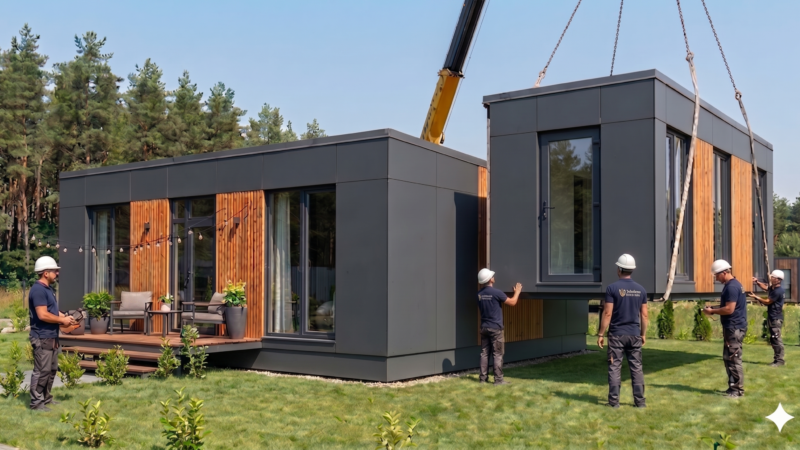
Is it possible to extend a modular house after it has been built?
In this article we'll go through all the ways to extend, their pros and limitations, and what needs to be built into the design in advance so that a future extension doesn't turn into an expensive problem.
 Frame houses from the manufacturer
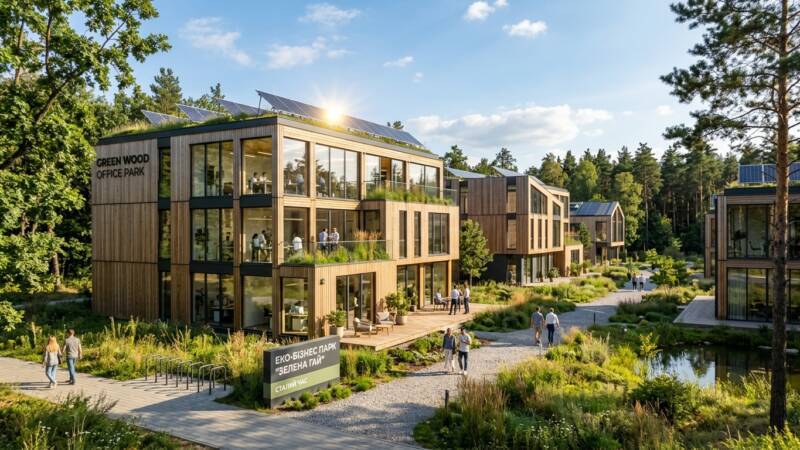
The Commercial Revolution: Modular and Timber-Frame Offices — The Future of Your Business
Modular and timber-frame offices — a fast, energy-efficient and flexible solution for businesses. Find out how modern construction is transforming commercial spaces.
 Construction technologies
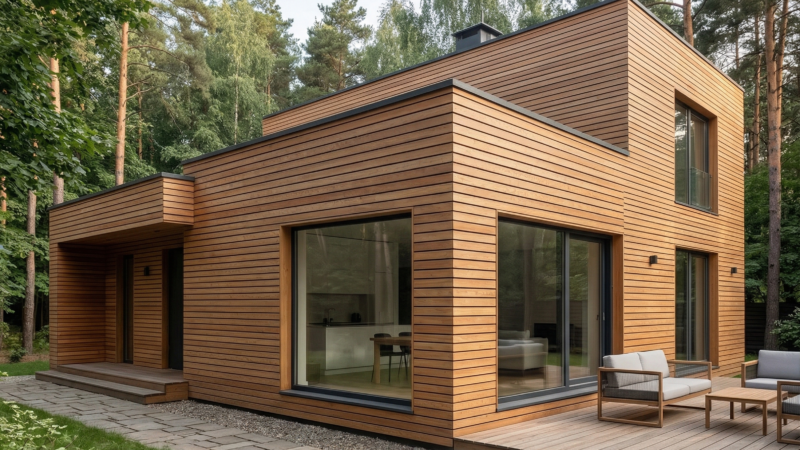
Modern façade aesthetics: why planken has finally beaten imitation timber
Imagine: you've just built your dream cottage. The fresh timber smells of resin, the façade looks like it's straight out of an architecture magazine. Three years later you look out the window and see a darkened, moisture-warped wall that looks more like a neglected bathhouse in the Carpathians than a modern private home.
 Construction technologies
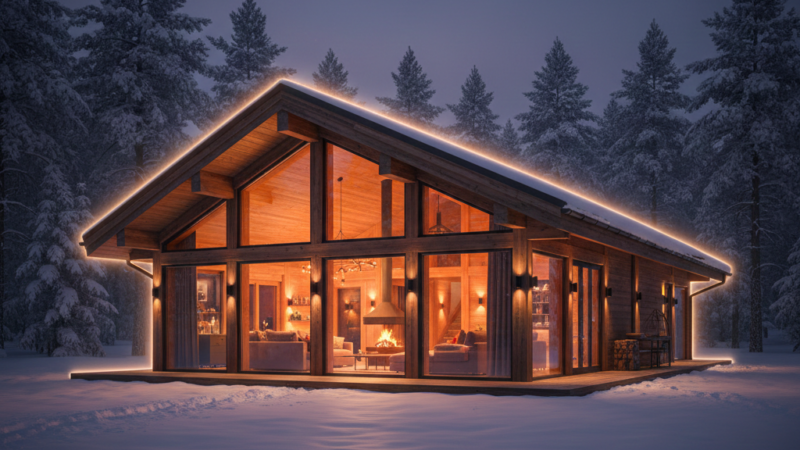
A house that heats itself: The whole truth about energy passive houses
Just a few years ago, the phrase «a house without heating bills» sounded like an advertising gimmick. Today, it is a building standard dictated by the market. Energy costs are rising, environmental standards are becoming stricter, and customers no longer want to «heat the street».
 Company news
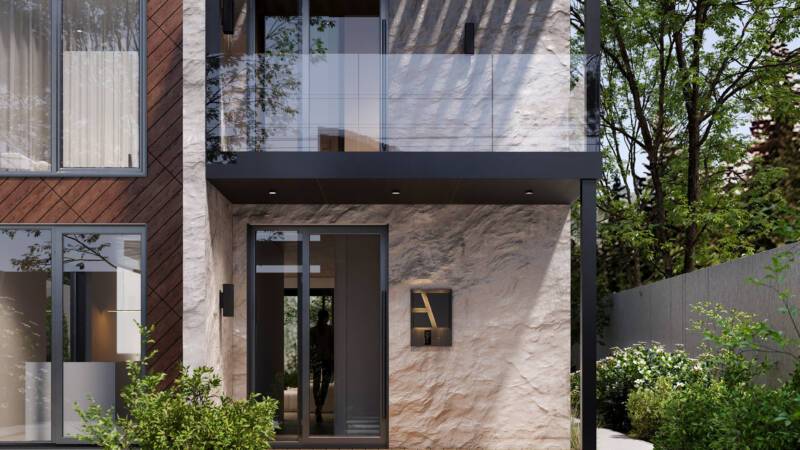
Choice of the Year 2025 according to the Ukrainian Business Award
Trident Modular was recognised as the «Choice of the Year 2025» by the Ukrainian Business Award, confirming our leadership in modular construction in Ukraine and Europe.
 Project overview
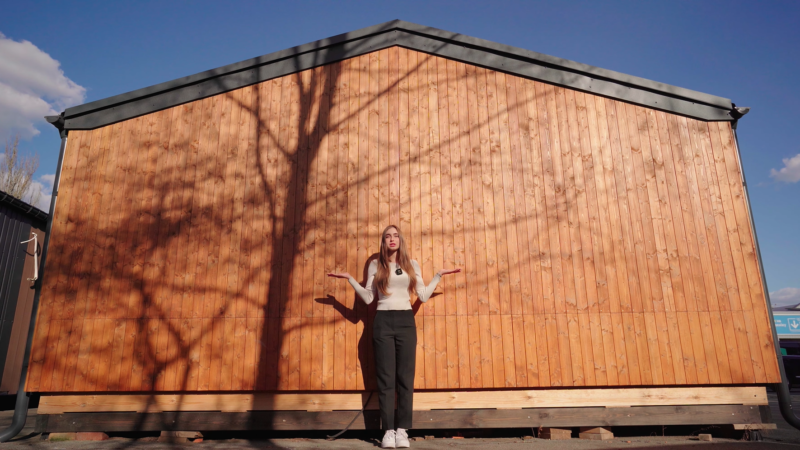
Video review of the Family House
You will learn about its thoughtful design, construction features, the materials we use, and the benefits that make this home ideal for a modern family.
 Modular houses
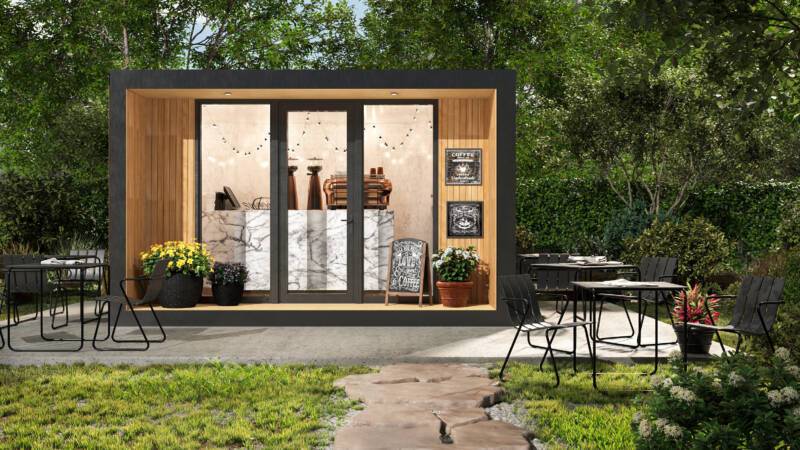
Modular buildings for business: offices, hotels, campsites, cafes
Modular construction is rapidly gaining popularity in Ukraine, especially among entrepreneurs. Modular hotels, mobile offices, campsites, cafes, and showrooms – all of these can be implemented quickly, conveniently, and at a reasonable price. If previously such structures caused distrust, now they are becoming a competitor to traditional buildings due to their functionality, rapid installation, and modern finishes.
 Construction technologies
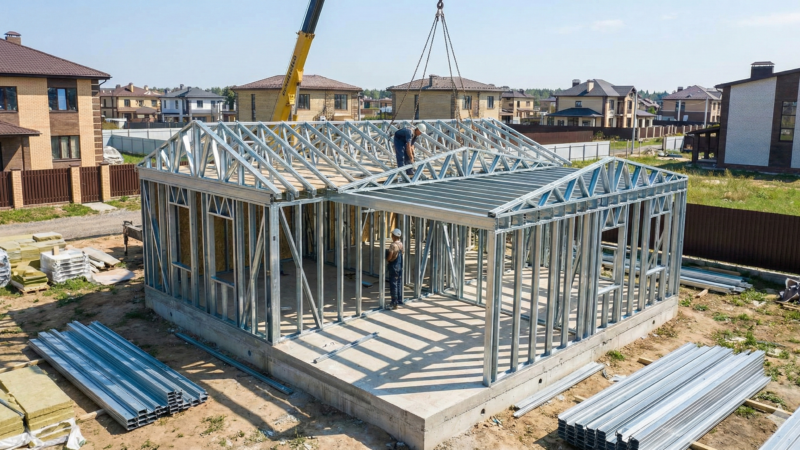
LSTS: The future of construction or just an «iron frame»? Full analysis of the technology
LGSF buildings consist of very thin steel elements with a thickness of no more than 3 mm. This type of steel structure is actively used for the rapid construction of buildings, as it has a number of advantages: lightness, ease of installation and high strength. Due to their flexibility and speed of construction, LGSF structures allow for the implementation of various architectural solutions that meet modern quality and energy efficiency requirements.
 Frame houses from the manufacturer
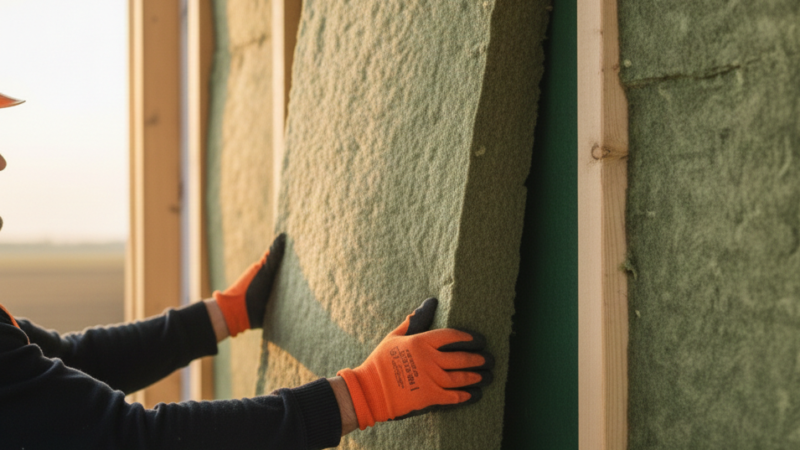
Insulation of a frame house - ensure comfort and cosiness of your home
When choosing the thickness of the insulation, it is important to take into account the climatic conditions of the region where the house will be built. In our area, 15 cm of insulation is quite enough, but experts often recommend choosing 20 cm to achieve the best thermal insulation result. This is much less compared to brick houses.
 Frame houses from the manufacturer
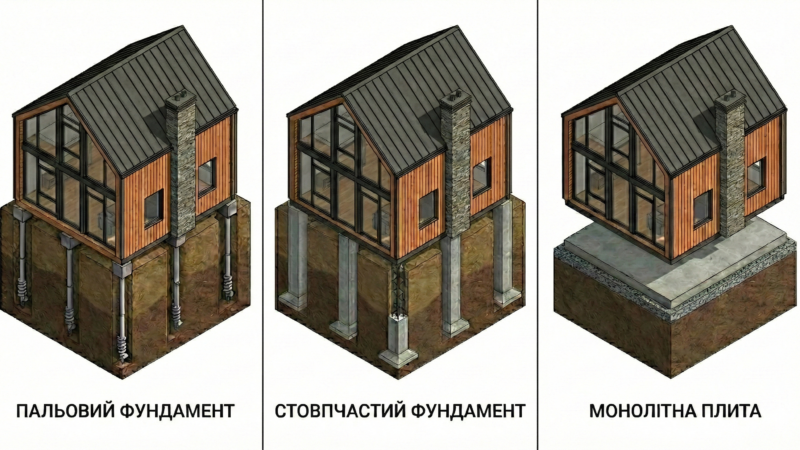
Foundation for a frame house - which one to choose?
The owner's choice will determine the durability, stability and reliability of the structure. The right decision will prevent many problems associated with moisture or subsidence. What type of foundation to choose in frame construction - strip, slab or column - depends on the site conditions, soil type, climatic features and budget.
 Frame houses from the manufacturer
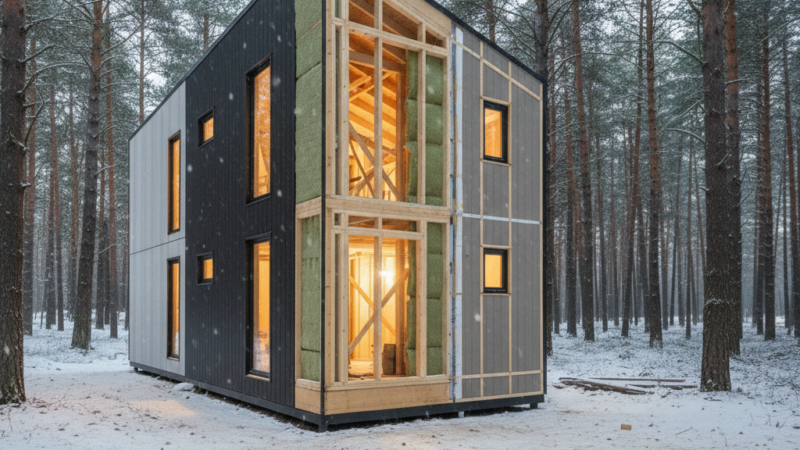
5 best materials for frame houses: how to buy a frame house made of quality materials
Find out what materials to choose to buy a frame house made of quality materials that ensure durability and comfort.
 Frame houses from the manufacturer
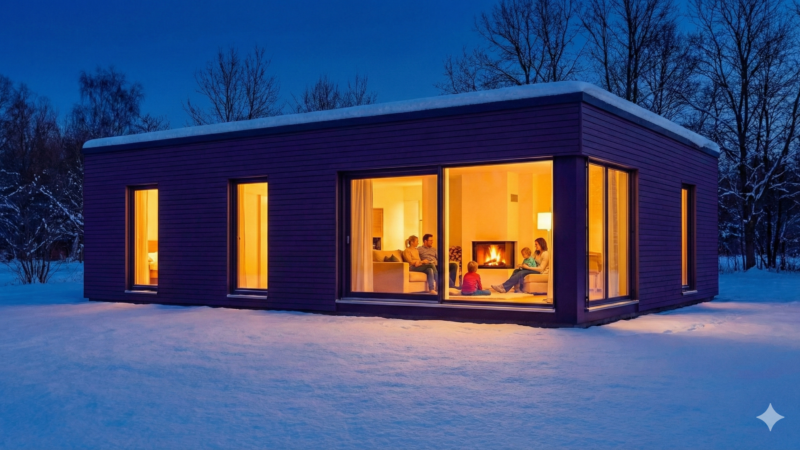
10 Modern insulation technologies: why it is worth buying an insulated frame house
Buying an insulated frame house means comfort and savings. An overview of insulation technologies, materials and their impact on energy efficiency.
 Frame houses from the manufacturer
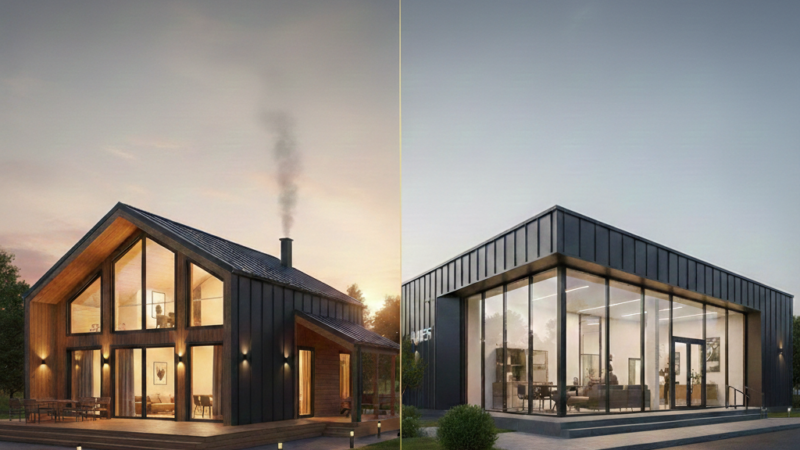
10 Advantages of buying a frame house for housing and business
Buying a frame house is an ideal solution for those who value fast construction, energy efficiency and environmental friendliness.
 Frame houses from the manufacturer
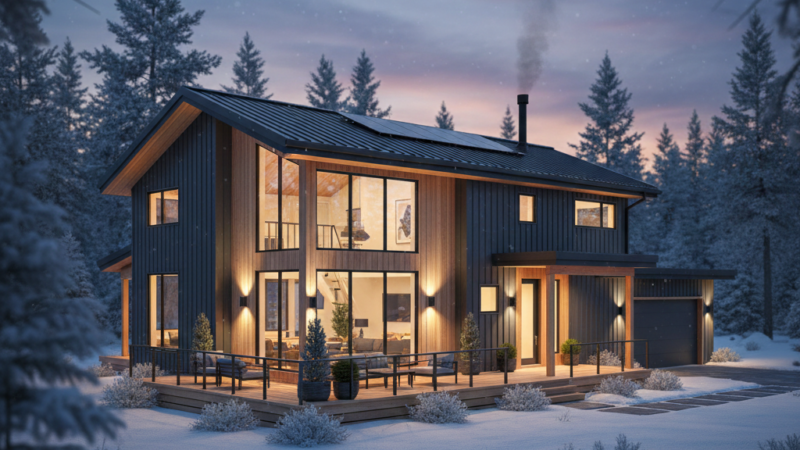
What are timber-framed houses – myths of timber-frame construction
The use of frame technology opens up a wide range of possibilities for construction, from modest garden sheds to impressive modern cottages with original architectural concepts. Today, the perception of frame buildings has undergone a radical change: no one is surprised anymore that such structures can be as comfortable and aesthetically pleasing as traditional stone buildings. Associations with temporary or inconvenient buildings are a thing of the past.
 Construction technologies
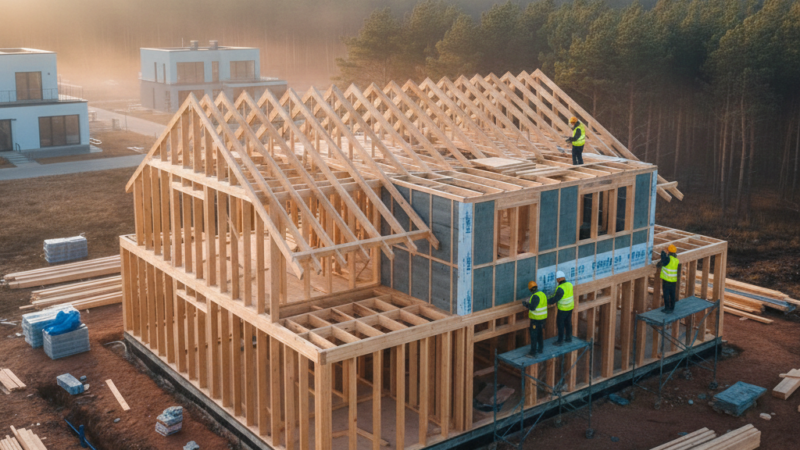
Technology for the construction of frame houses
Today, the technology of building frame houses is one of the most modern, but its origins date back to the 15th century, when half-timbered structures began to appear in Germany. The introduction of frame-panel methods has necessitated the development of new building materials that would meet the requirements of this technology. Among them are oriented strand boards (OSB), moisture and vapour barrier films, insulation based on basalt and other mineral fibres, as well as modern materials for roofing and roofing.
 Construction technologies
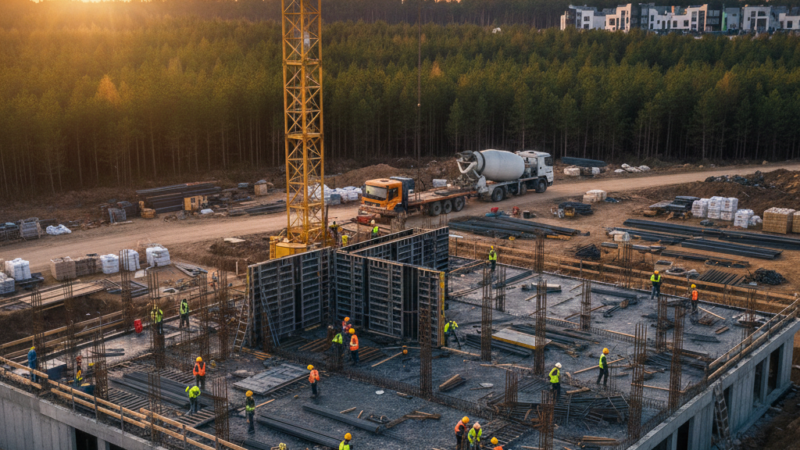
What is the monolithic frame construction technology?
A monolithic frame building is a modern seamless construction that is becoming increasingly popular. This method involves the use of reinforced concrete to create a building frame, which ensures high strength and durability. The basic idea is that load-bearing walls and floors are made of monolithic reinforced concrete, which allows for the construction of complex architectural forms and the abandonment of traditional structural constraints. In this article, we will take a closer look at what monolithic frame technology is and what amazing solutions it offers.
 Modular houses
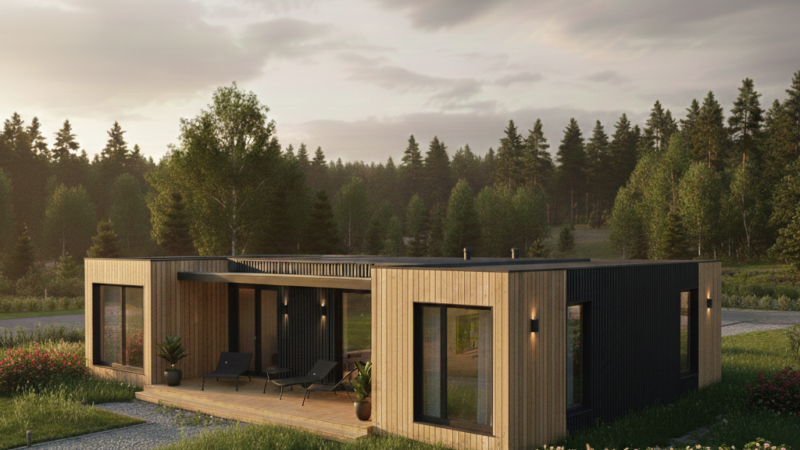
What is a modular house?
Modular houses first appeared in the mid-20th century and were initially used for commercial and industrial purposes. Over time, their effectiveness was also recognised in the private housing sector. The growing popularity of modular container construction technologies is linked to their significant functional advantages – modules have proven to be an economical and convenient option. Manufactured in factories in large volumes, they are easy to transport and assemble on-site, like a jigsaw puzzle.
 Modular houses
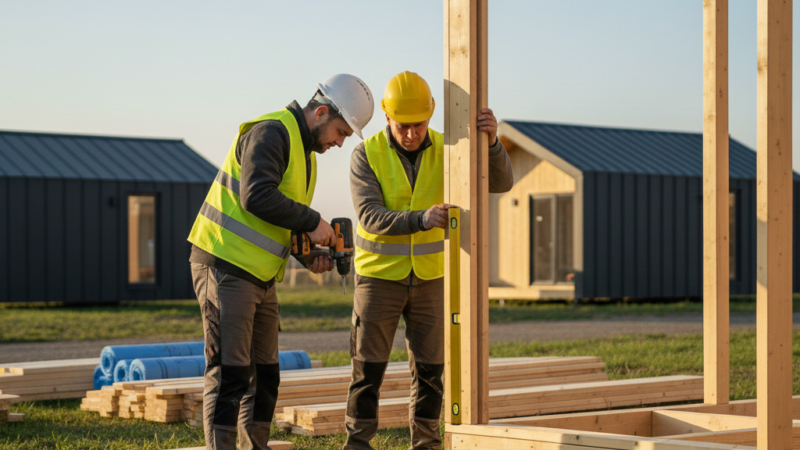
Do-it-yourself modular house
Building a house is a responsible task, especially when it comes to constructing it yourself. Increasingly, modular homes are being chosen, as they do not require significant effort or a large amount of time. Installation can be mastered independently, so we recommend considering this option for construction, both for residential and commercial purposes.

Blog · 40 articles
Trident Modular blog
Practical materials on modular and frame construction for living, business and investment

Planning a house? Let’s discuss your project
Leave a request and a Trident Modular engineer will match a project to your plot and calculate the cost and timeline.
- Free consultation
- A project matched to your needs
- Cost and timeline estimate
HOUSING AND BUSINESS
Buildings to suit your needs
Blog about modular and frame houses
The Trident Modular blog is a professional information space about modular and frame construction, is based on real experience in the design, production and implementation of construction projects. We publish materials for those who want to gain a deeper understanding of modern construction technologies, assess their practical feasibility, and make an informed decision about the future of the facility.
Our blog is aimed at both private customers and businesses, developers and investors. We talk about construction in the language of engineering, processes and results, explaining complex things in a clear and structured way.
Modular houses: a modern approach to construction
What is a modular house
A modular building is a building whose main elements are manufactured in the form of prefabricated modules and delivered to the site for installation. This approach makes it possible to transfer most of the construction process to a controlled factory environment.
In this blog, we take a closer look:
- principles of modular construction;
- types of modules and their configuration;
- limitations and scalability;
- comparison with classical capital construction.
Advantages of modular houses
One of the key topics of the blog is advantages of modular buildings. We do not analyse general marketing promises, but real performance:
- Reduced implementation time;
- quality control at the production stage;
- budget predictability;
- minimising risks at the construction site.
Particular attention is paid to when modular technology is the best choice and when alternative solutions should be considered.
Frame construction: an engineering system, not a simplified format
Structural principles of frame houses
Frame construction is often perceived as simplistic, but in fact it is a complete engineering system, which requires precise design and quality implementation. In the Trident Modular blog, we explain:
- how the supporting frame is formed;
- What materials are used;
- how spatial rigidity is ensured;
- the role played by the tightness of the enclosure.
Energy efficiency of frame houses
Energy efficiency is one of the most important topics for modern construction. We take a closer look at it:
- multilayer wall structure;
- thermal insulation materials;
- junction points;
- protection against heat loss and condensation.
The blog materials help to understand why a frame house can be not only comfortable but also cost-effective in long-term operation.
Design of modular and frame buildings
Design as the basis for results
Design is a key stage that determines the success of the entire construction process. In the blog, we reveal:
- how the terms of reference are formed;
- why it is important to consider production and logistics at the project stage;
- how to avoid common mistakes;
- the difference between designing for a private house and a commercial facility.
Design with modular technology in mind
Modular design has its own peculiarities. We explain:
- how the dimensions of the modules are laid down;
- How the transport is planned;
- How assembly processes are optimised;
- how the building can be expanded in the future.
These materials are especially useful for developers and customers planning scalable or serial projects.
Construction for business and investment
Commercial building formats
A separate section of the blog is dedicated to buildings for business. We are considering:
- hotels and apart-hotels;
- tourist complexes;
- office and administrative buildings;
- service and infrastructure facilities.
The materials analyse how modular and frame solutions allow facilities to be commissioned quickly and adapted to business objectives.
Scaling up and mass production
Repeatability and predictability are important to investors. In this blog, we explain:
- how the mass production of modular buildings works;
- What limitations should be taken into account;
- how to optimise costs when scaling;
- why standardisation does not mean a loss of quality.
Logistics, installation and project implementation
Delivery of modular buildings
Logistics is an important component of modular construction. We will tell you in detail:
- how delivery routes are planned;
- What are the requirements for the site;
- how unloading and assembly is carried out;
- what factors affect the implementation time.
Installation and commissioning
The assembly of modular and frame buildings is a precise engineering process. In the blog, we analyse it:
- the sequence of installation work;
- interaction between modules;
- quality control at the site;
- common mistakes and how to avoid them.
Standards, technology and quality control
International and industry standards
The quality of buildings is determined not only by materials but also by standards. We publish materials about:
- industry standards;
- certification principles;
- internal quality control regulations;
- Durability of design solutions.
Future technologies in construction
The blog also discusses current trends:
- new thermal insulation materials;
- engineering solutions for energy efficiency;
- approaches to sustainable construction;
- environmental friendliness and resource conservation.
Who is the Trident Modular blog for?
Our blog will be useful:
- those who are planning to build a private house;
- entrepreneurs and developers;
- to real estate investors;
- architects and engineers;
- anyone who wants to make decisions based on facts, not assumptions.
Practical experience instead of theory
Every article on the Trident Modular blog is based on real experience. We do not publish abstract texts - only practical explanations, examples of completed projects, and analysis of solutions that work in real life.
The blog is regularly updated and supplemented with new materials in line with the development of technologies, standards and the construction market.