
Technology
Industrial technology for modular construction with predictable timelines, controlled quality, and scalability for B2B projects
Technology Trident is
Panel-module system based on timber-frame construction. This combines engineering precision, factory quality control, and architectural flexibility. The technology allows for the implementation of individual housing projects for developers, the hotel business, the commercial segment, and the private sector.
Panel-frame houses
The building is supplied as prefabricated closed-type floor, wall, and roof panels with basalt insulation in accordance with thermal conductivity requirements. This allows for the rapid assembly of the building's warm shell and transition to internal works.
Modular houses
Production technology of high-degree factory-readiness modules with interior finishing, engineering networks, and installed windows and doors. Site installation takes minimal time and is reduced to module joining and utility connection.
Classic frameNo houses
A flexible solution for combining the implementation of individual projects or complex architectural forms with the possibility of phased construction.
Hybrid system
A combined system of classical construction, panel systems, and modules for optimising logistics, budget, and project timelines in complex projects.
Structural basis
The system's foundation is a combination of an American-type frame with Finnish wood processing technology (calibrated planed timber of coniferous species dried in a kiln with a strength class C24).
Frame system
The supporting base is made from kiln-dried planed timber of strength class C24 with a controlled moisture content of 12–15%, which ensures geometric stability and predictable performance of the structure under load.
Thermal and humidity conditions
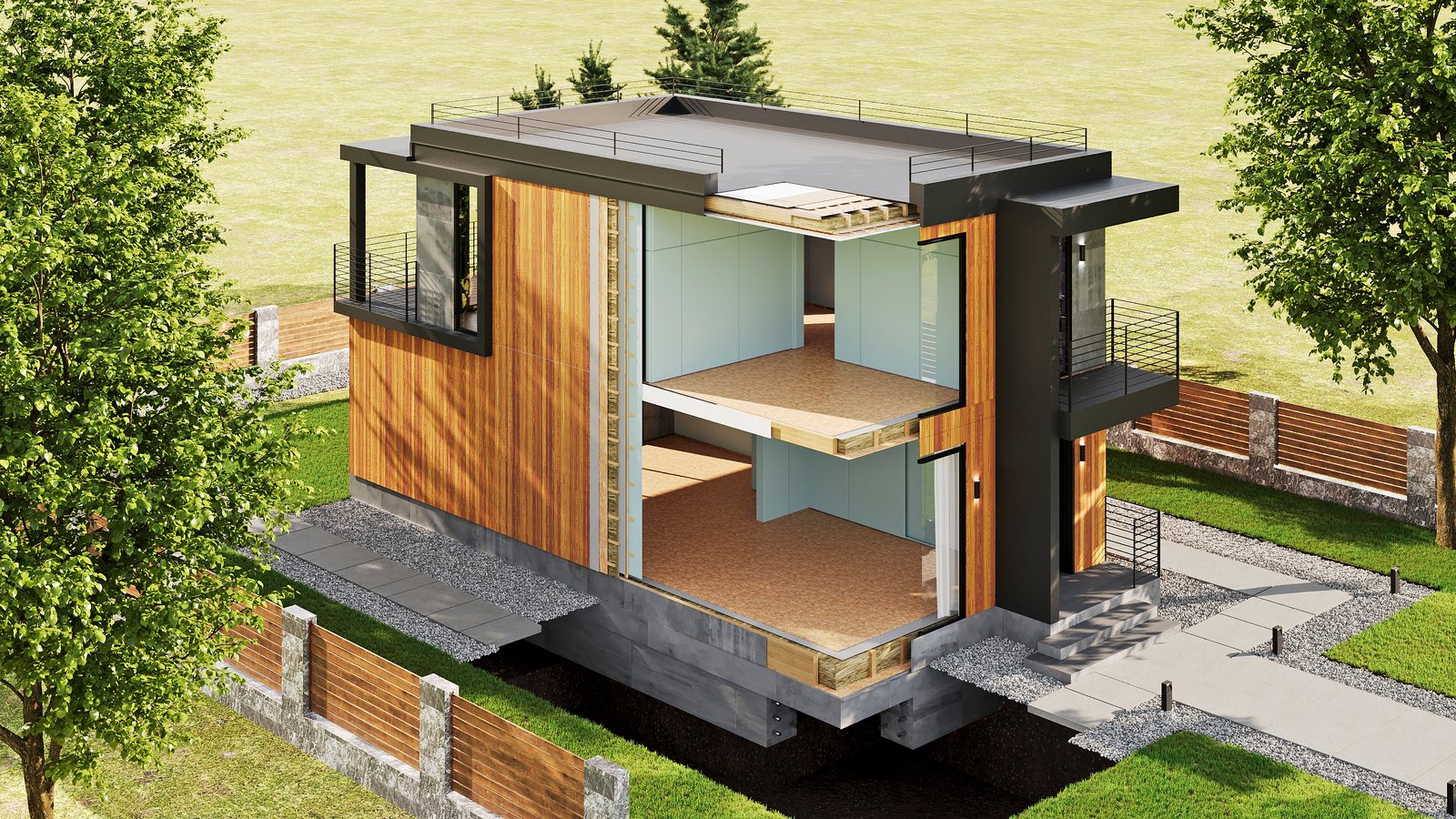
Enclosure structures are insulated with non-combustible basalt wool of class A1. The layers of the structure are formed taking into account the correct operation of moisture and heat, which ensures stable energy efficiency throughout the entire service life.
Spatial rigidity
The rigidity of the building is formed by the slab sheathing and calculated fastening nodes, which act as rigid diaphragms and perceive wind and horizontal loads.
Factory quality
Panels and modules are manufactured in factory conditions with precise adherence to design dimensions and assembly technology, which minimises errors and reduces installation times on site.
Construction and materials
The construction of an energy-efficient house
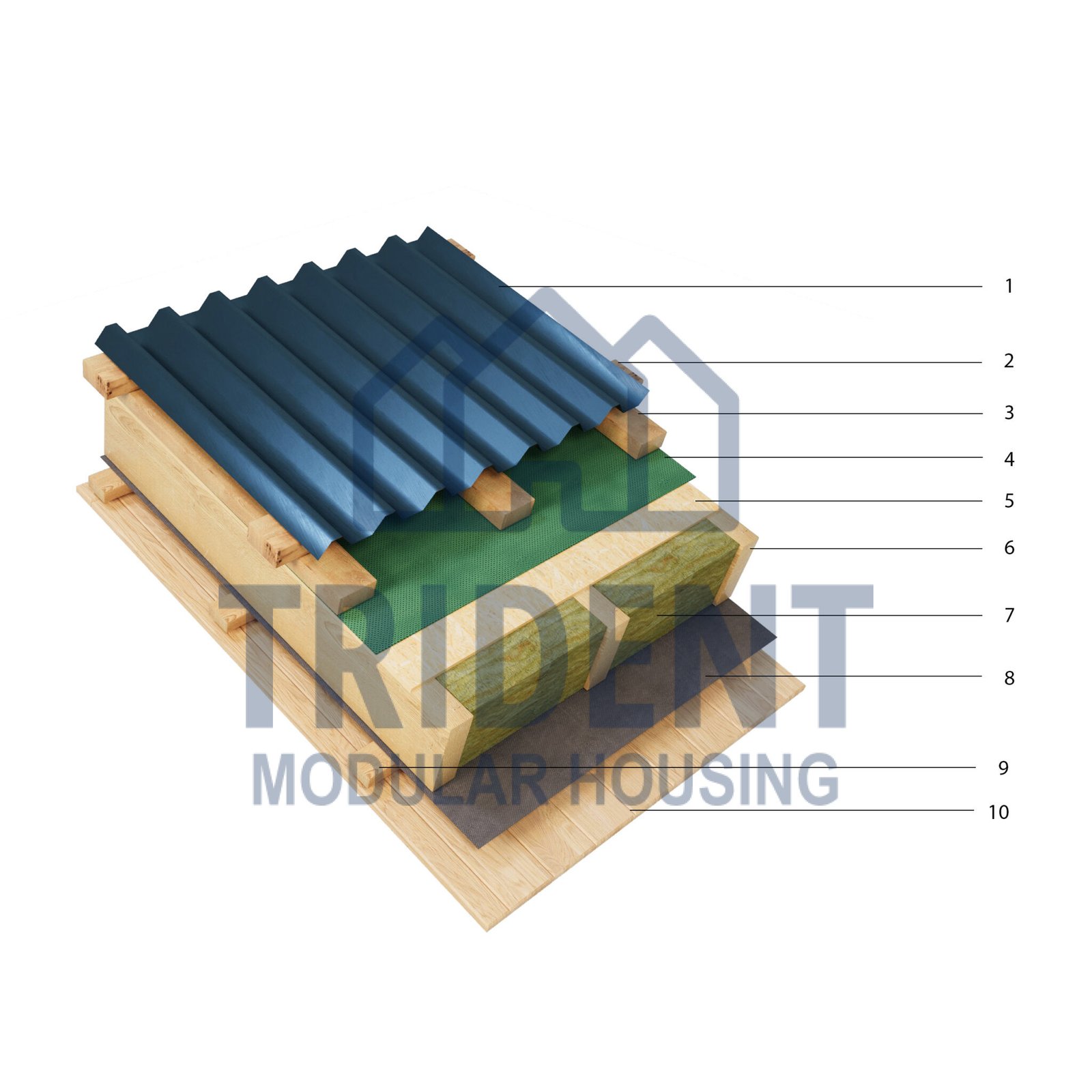
# | Ball | |
|---|---|---|
1 | Roofing | Optional |
2 | Mounting rail | 35 mm |
3 | Guard rail | 35 mm |
4 | Diffusion membrane | Jute |
5 | OSB-3 | 12 mm |
6 | Load-bearing frame | 95 mm |
7 | Basalt wool insulation | 100 mm |
8 | Vapour control layer | Jute |
9 | Internal finishing installation system | Optional |
10 | Interior finishing | Optional |
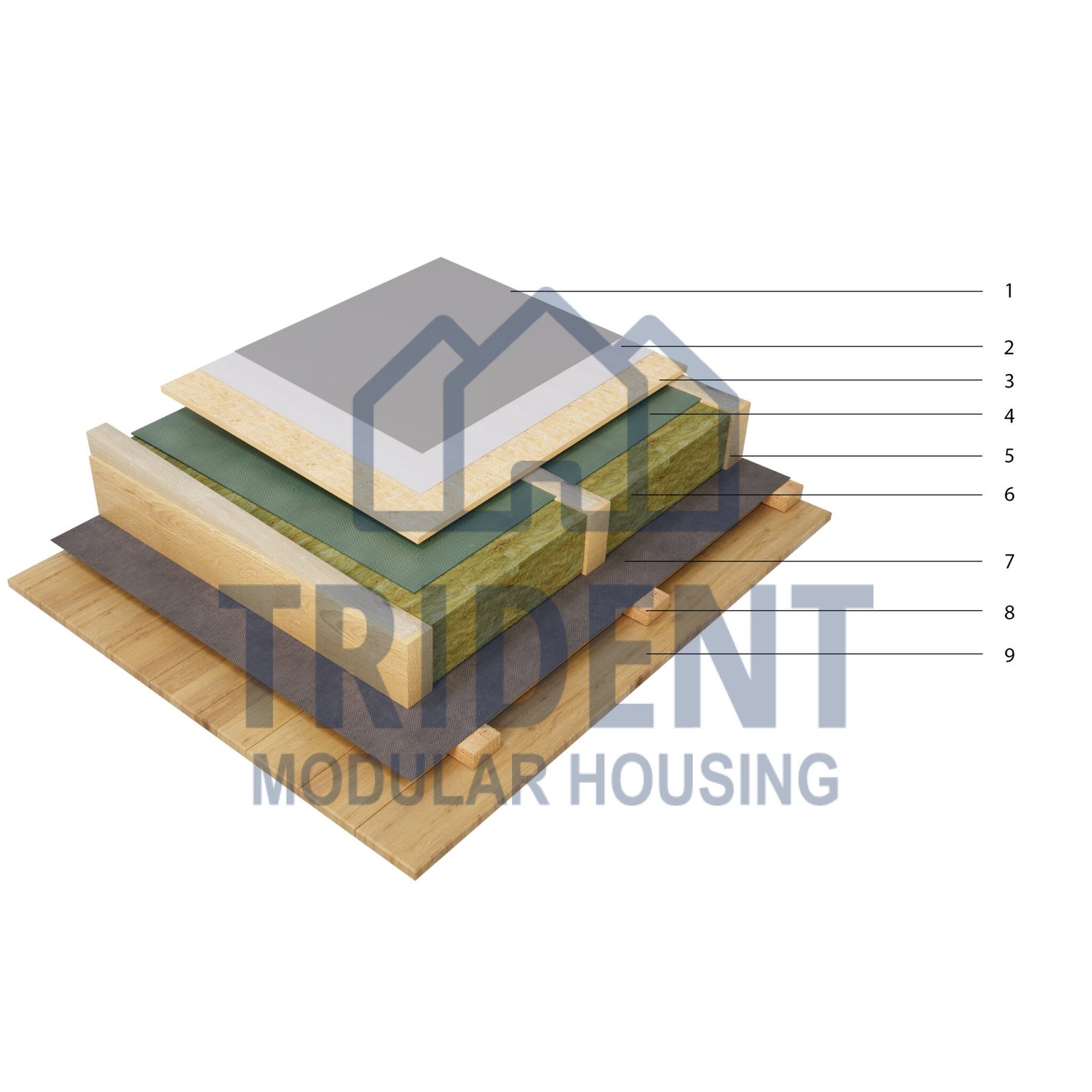
# | Ball | |
|---|---|---|
1 | Roofing | Optional |
2 | Geotextile | 35 mm |
3 | OSB-3 | 18 – 22 mm |
4 | Diffusion membrane | Jute |
5 | Load-bearing frame | 95 mm |
6 | Basalt wool insulation | 100 mm |
7 | Vapour control layer | Jute |
8 | Internal finishing installation system | Optional |
9 | Interior finishing | Optional |
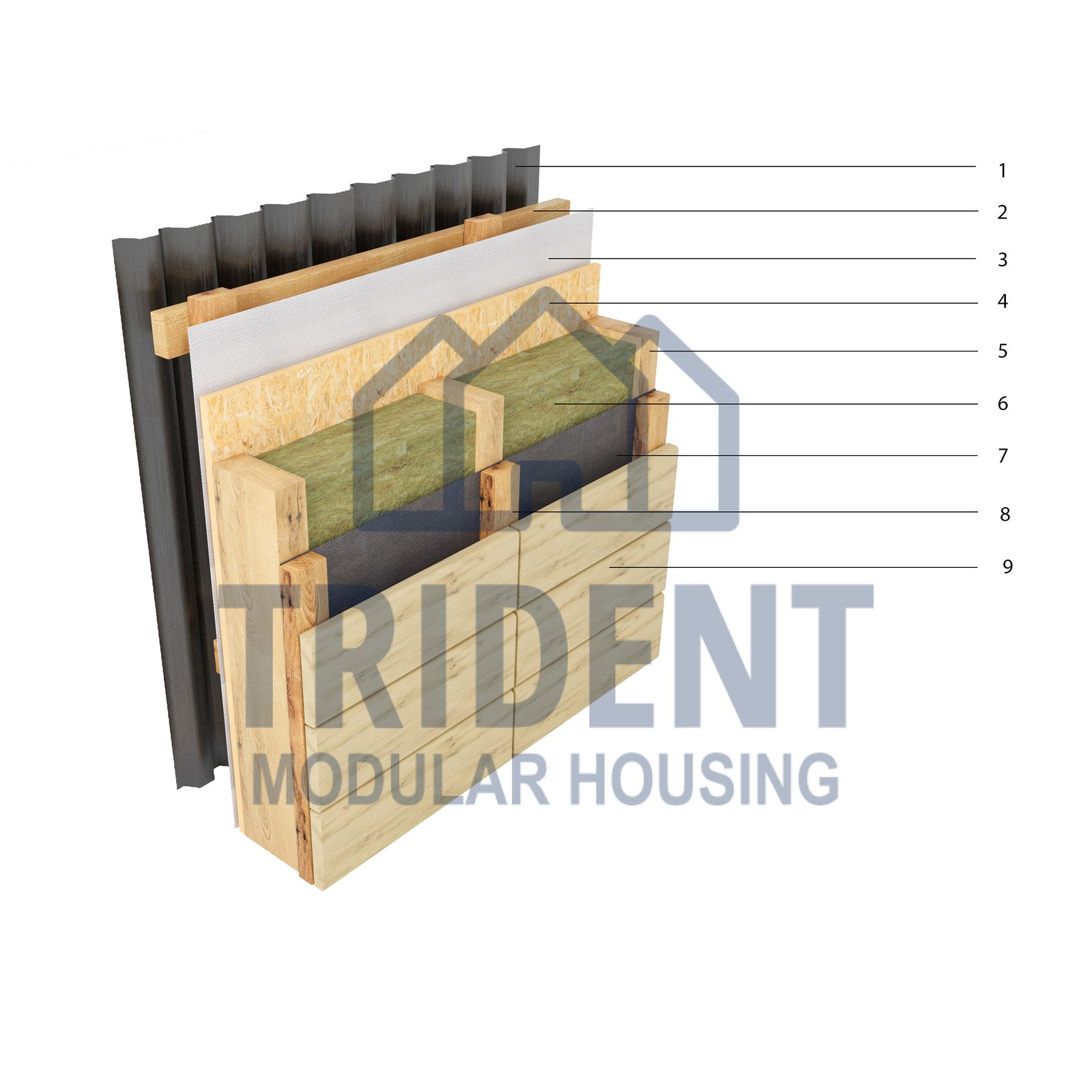
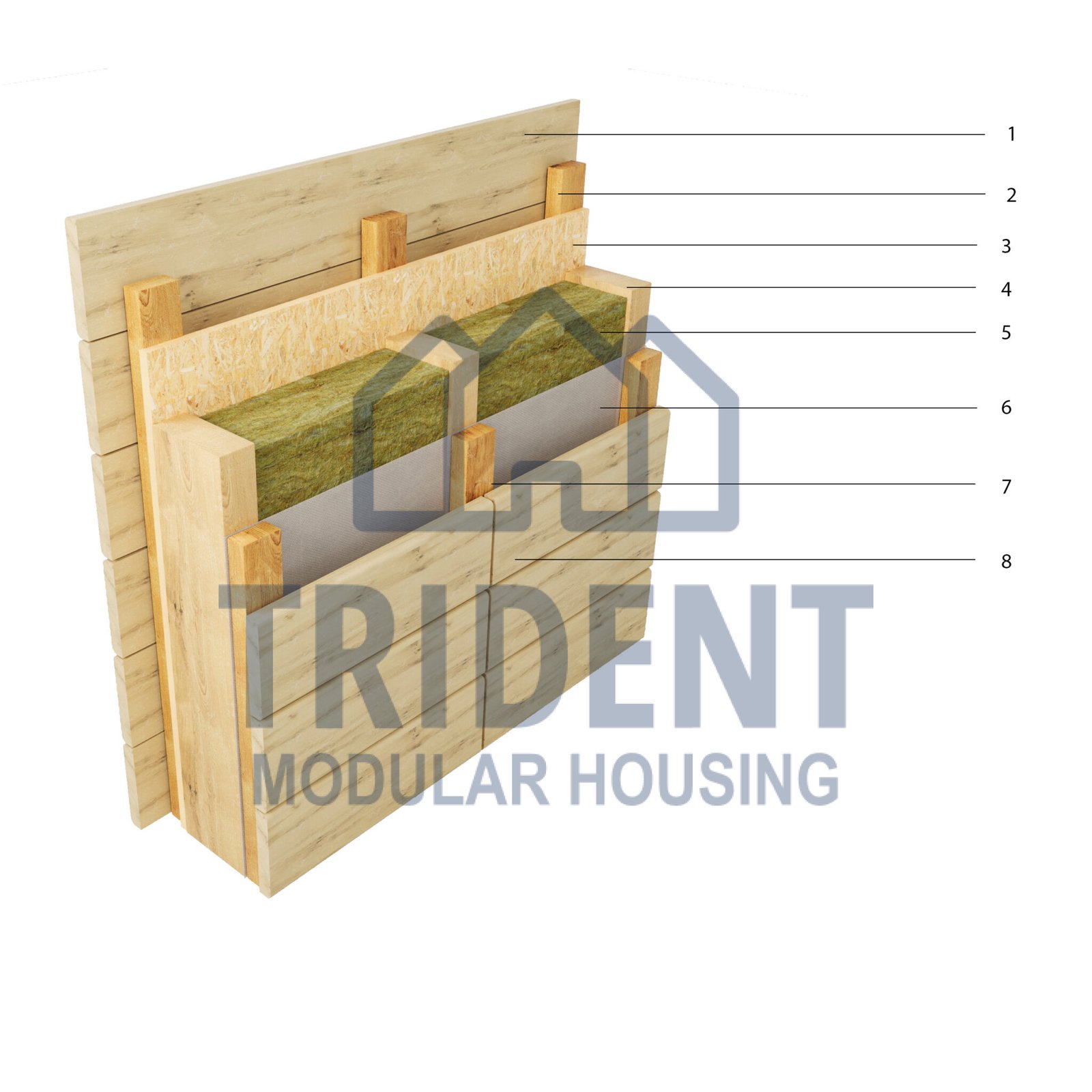
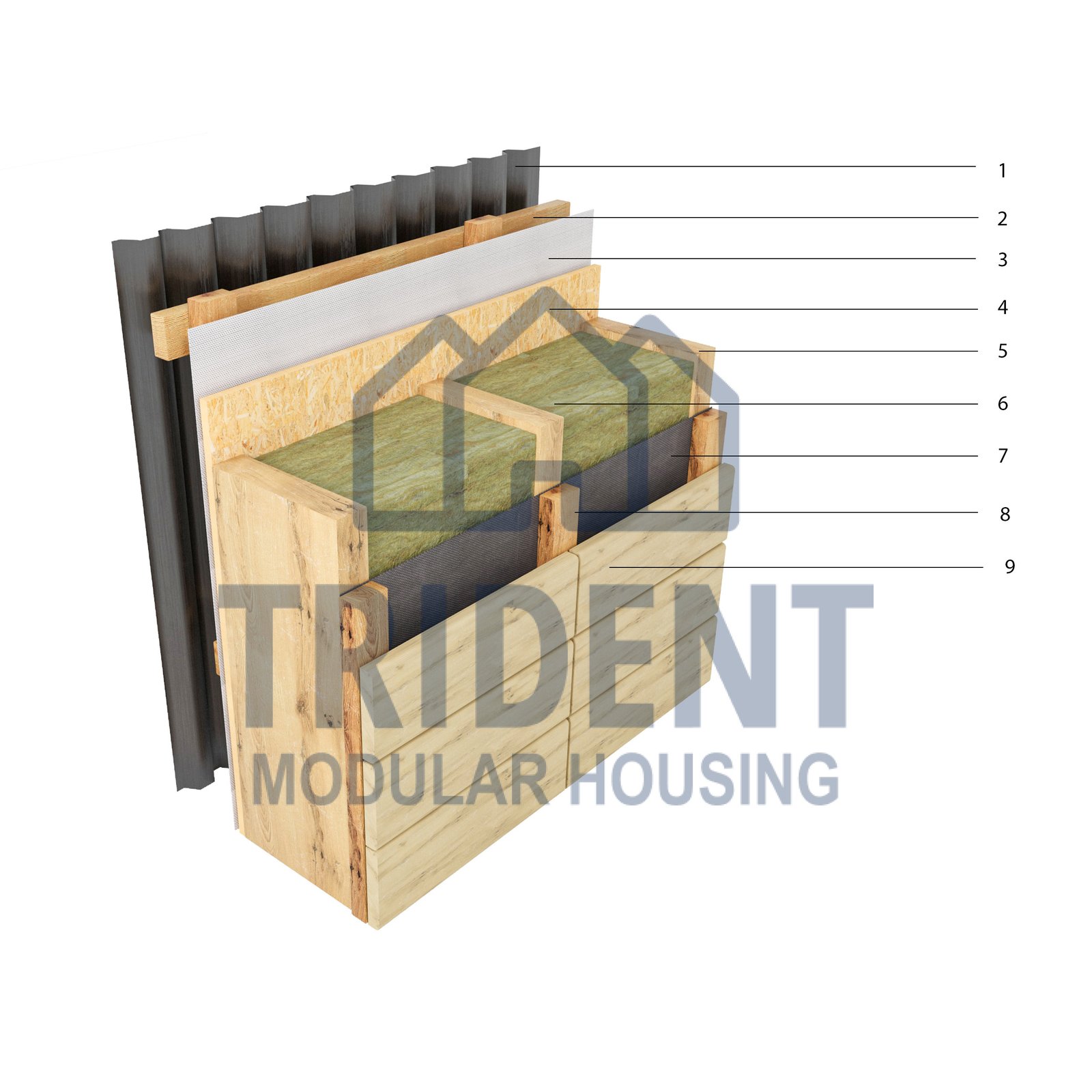
# | Ball | |
|---|---|---|
1 | Facade | Optional |
2 | Mounting rail | 35 mm |
3 | Diffusion membrane | Jute |
4 | OSB-3 | 12 mm |
5 | Load-bearing frame | 95 mm |
6 | Basalt wool insulation | 100 mm |
7 | Vapour control layer | Jute |
9 | Internal finishing installation system | Optional |
8 | Interior finishing | Optional |
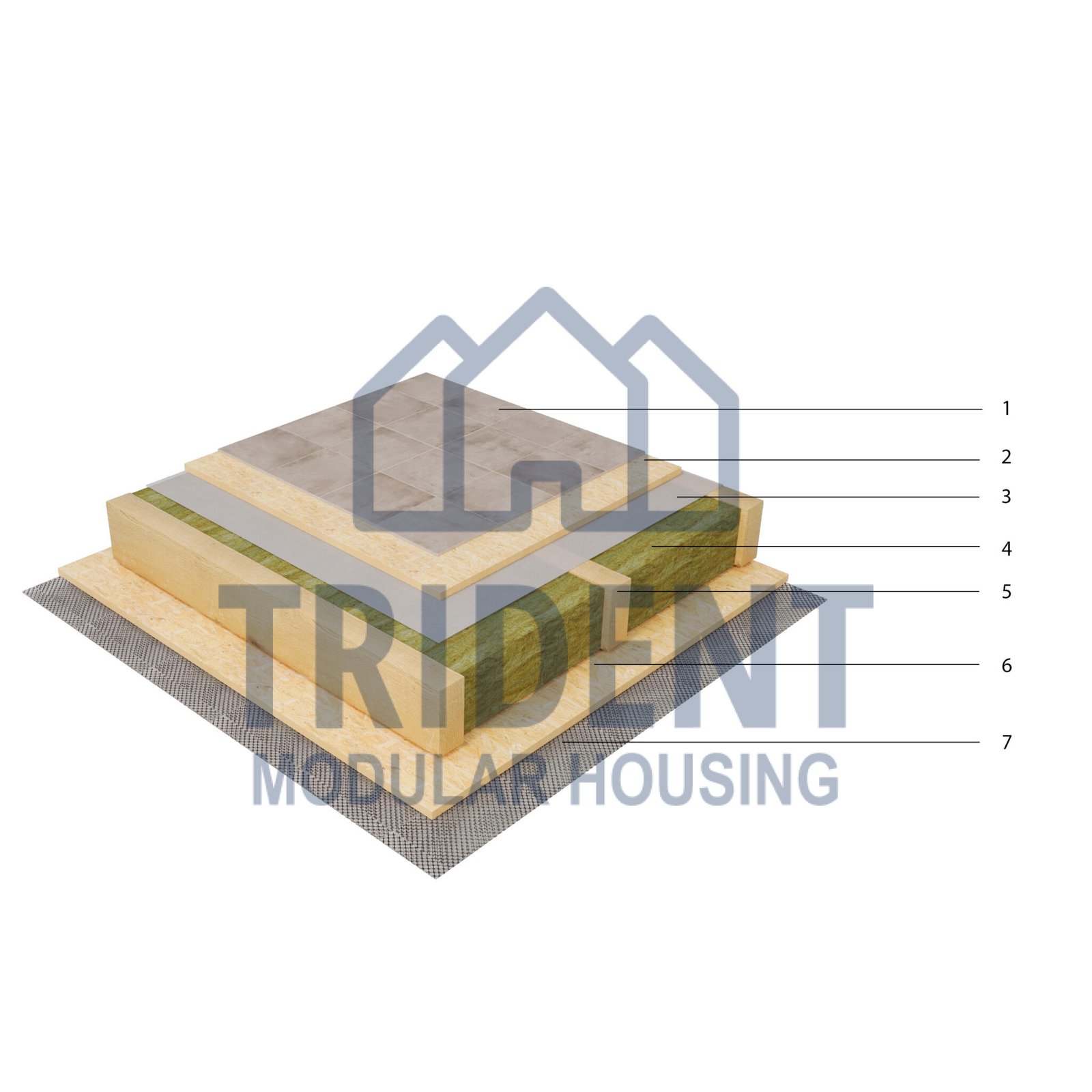
# | Ball | |
|---|---|---|
1 | Interior finishing | Optional |
2 | Internal finishing installation system | Optional |
3 | OSB-3 | 10 mm |
4 | Load-bearing frame | 95 mm |
5 | Basalt wool insulation | 100 mm |
6 | Vapour control layer | Jute |
7 | Internal finishing installation system | Optional |
8 | Interior finishing | Optional |
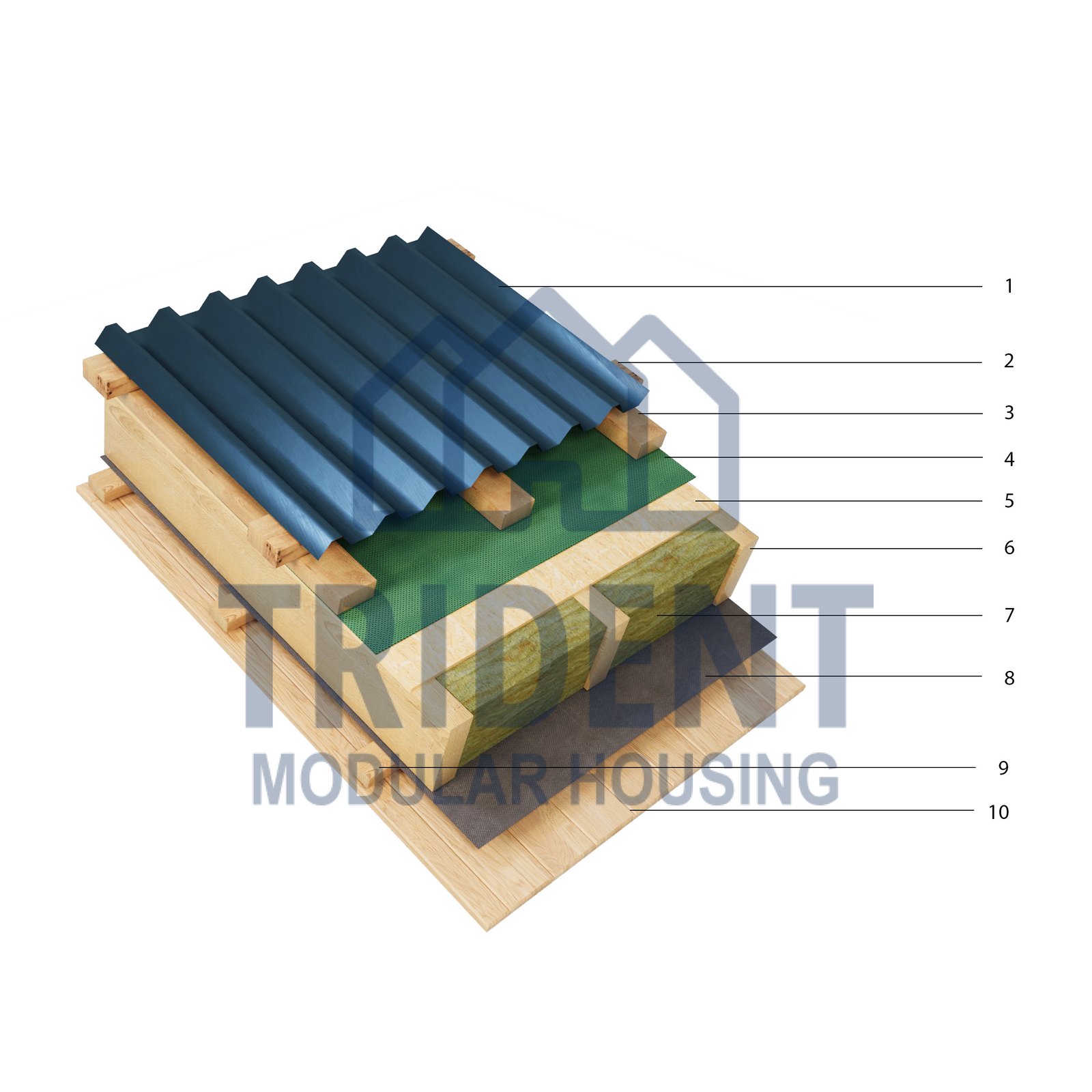
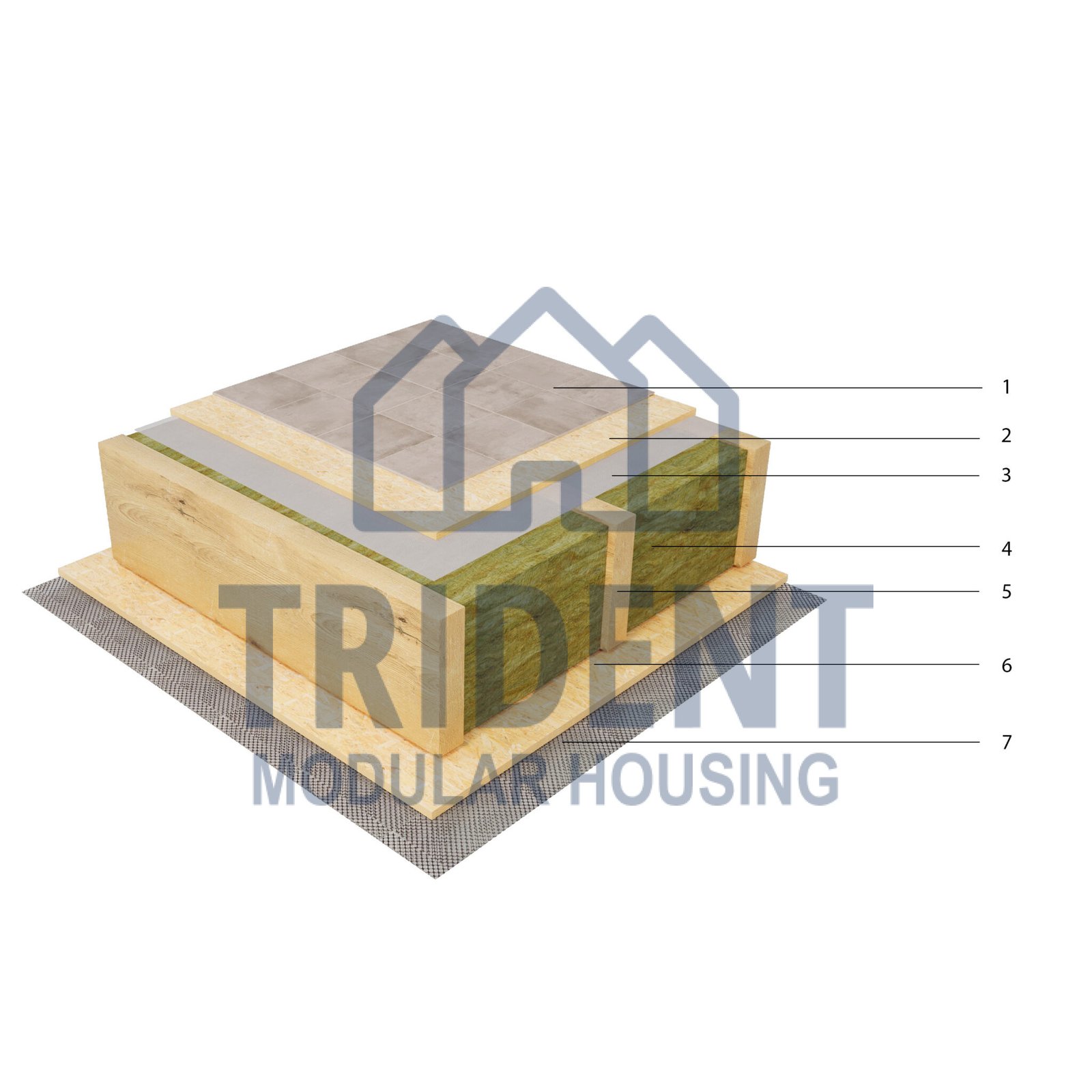
# | Ball | |
|---|---|---|
1 | Interior finishing | Optional |
2 | OSB-3 | 18 mm |
3 | Vapour control layer | Jute |
4 | Basalt wool insulation | 100 mm |
5 | Load-bearing frame | 95 mm |
6 | OSB-3 | 10 mm |
7 | Rodent mesh | Optional |
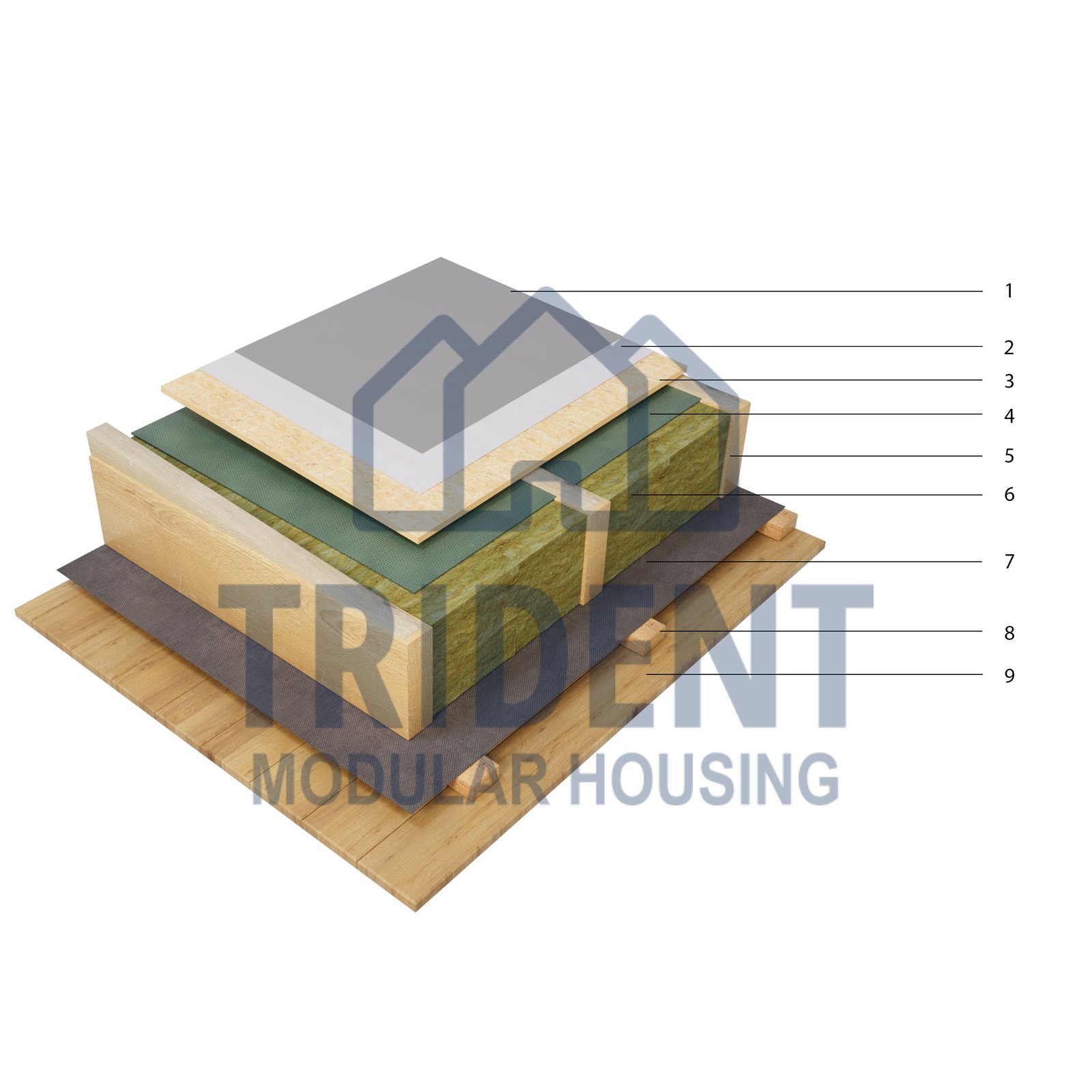
# | Ball | |
|---|---|---|
1 | Roofing | Optional |
2 | Mounting rail | 35 mm |
3 | Guard rail | 35 mm |
4 | Diffusion membrane | Jute |
5 | OSB-3 | 12 mm |
6 | Load-bearing frame | 145 mm |
7 | Basalt wool insulation | 150 mm |
8 | Vapour control layer | Jute |
9 | Internal finishing installation system | Optional |
10 | Interior finishing | Optional |
# | Ball | |
|---|---|---|
1 | Roofing | Optional |
2 | Geotextile | 35 mm |
3 | OSB-3 | 18 – 22 mm |
4 | Diffusion membrane | Jute |
5 | Load-bearing frame | 145 mm |
6 | Basalt wool insulation | 150 mm |
7 | Vapour control layer | Jute |
8 | Internal finishing installation system | Optional |
9 | Interior finishing | Optional |
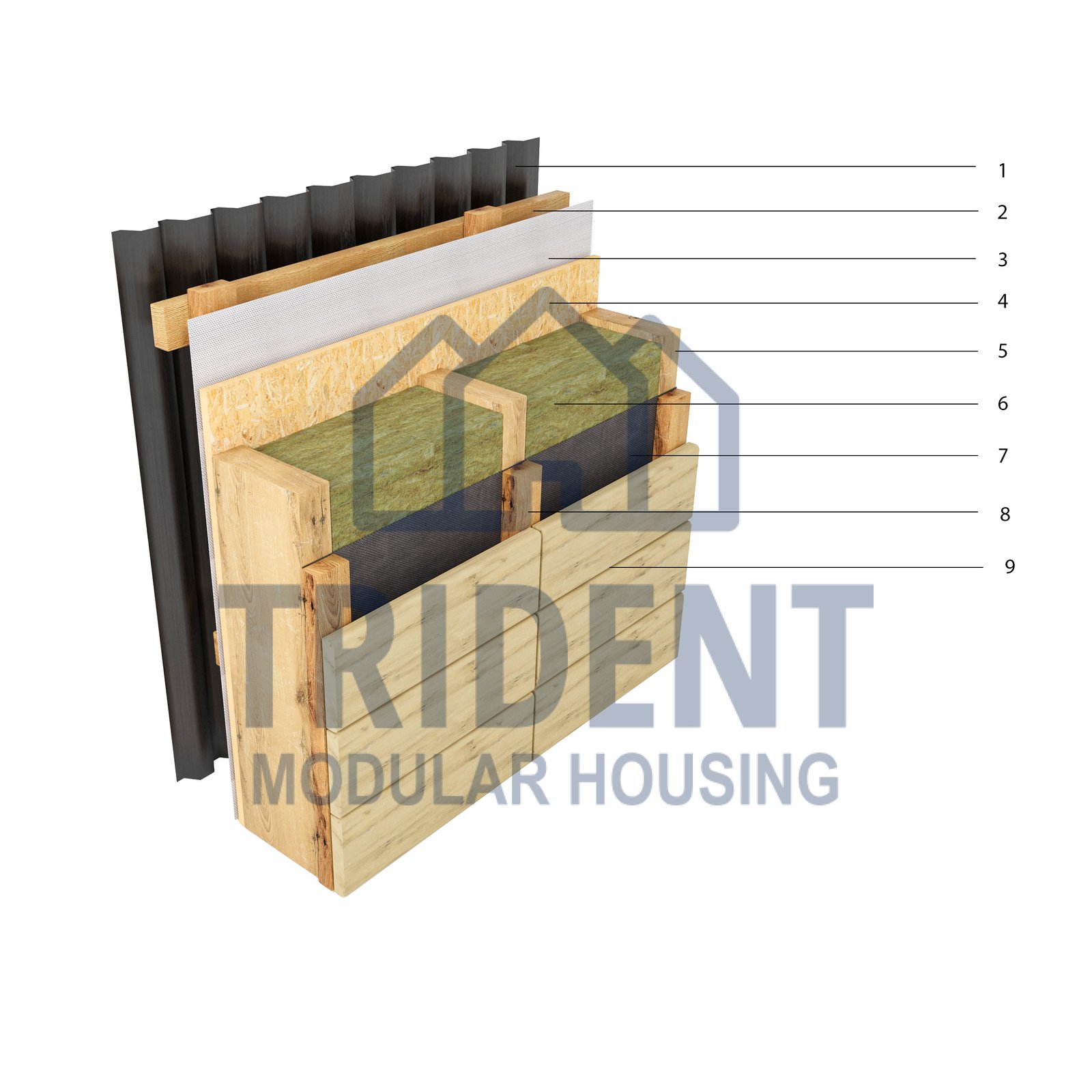
# | Ball | |
|---|---|---|
1 | Facade | Optional |
2 | Mounting rail | 35 mm |
3 | Diffusion membrane | Jute |
4 | OSB-3 | 12 mm |
5 | Load-bearing frame | 145 mm |
6 | Basalt wool insulation | 150 mm |
7 | Vapour control layer | Jute |
8 | Internal finishing installation system | Optional |
9 | Interior finishing | Optional |
# | Ball | |
|---|---|---|
1 | Interior finishing | Optional |
2 | Internal finishing installation system | Optional |
3 | OSB-3 | 10 mm |
4 | Load-bearing frame | 95 mm |
5 | Basalt wool insulation | 100 mm |
6 | Vapour control layer | Jute |
7 | Internal finishing installation system | Optional |
8 | Interior finishing | Optional |
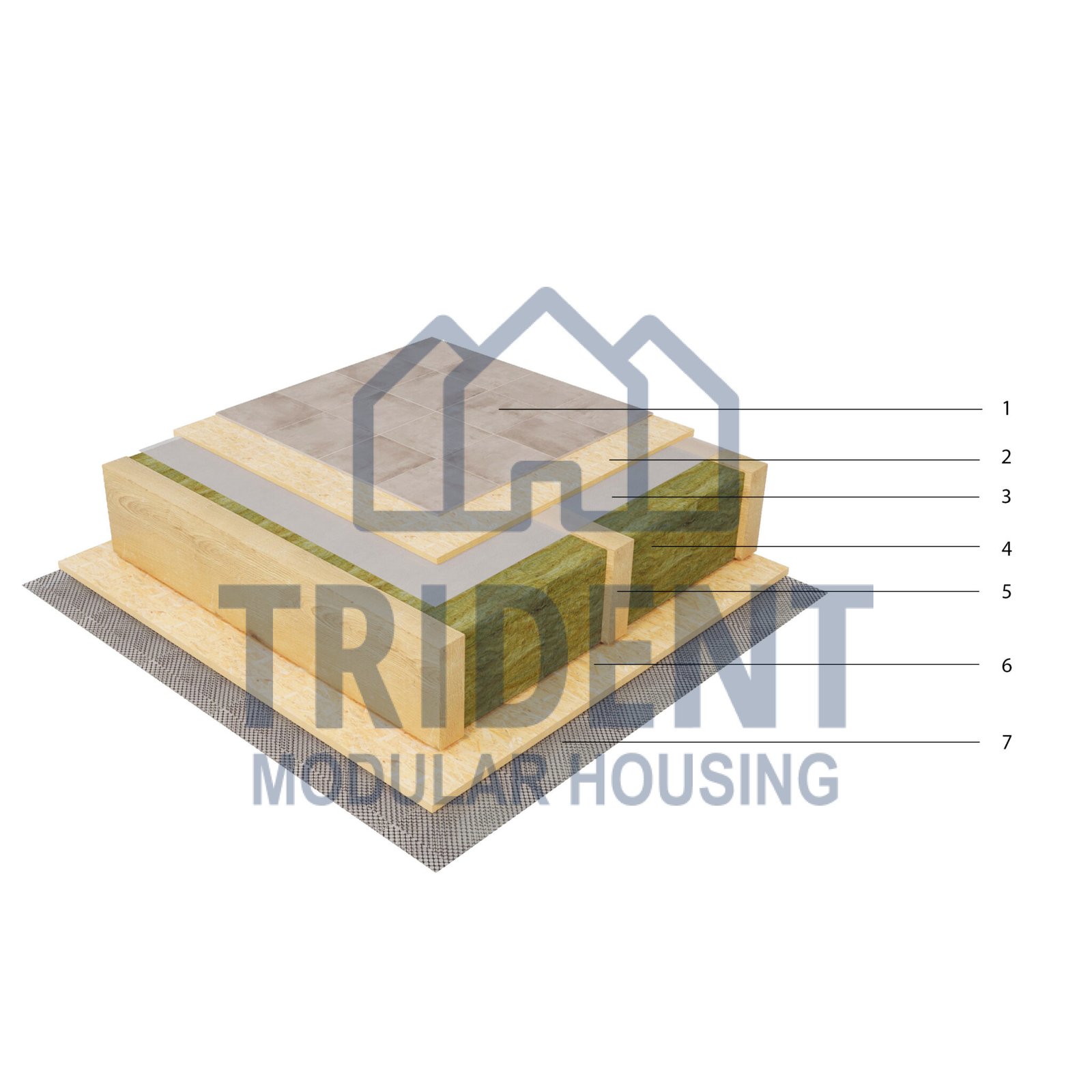
# | Ball | |
|---|---|---|
1 | Interior finishing | Optional |
2 | OSB-3 | 18-22 mm |
3 | Vapour control layer | Jute |
4 | Basalt wool insulation | 150 mm |
5 | Load-bearing frame | 145 mm |
6 | OSB-3 | 10 mm |
7 | Rodent mesh | Optional |
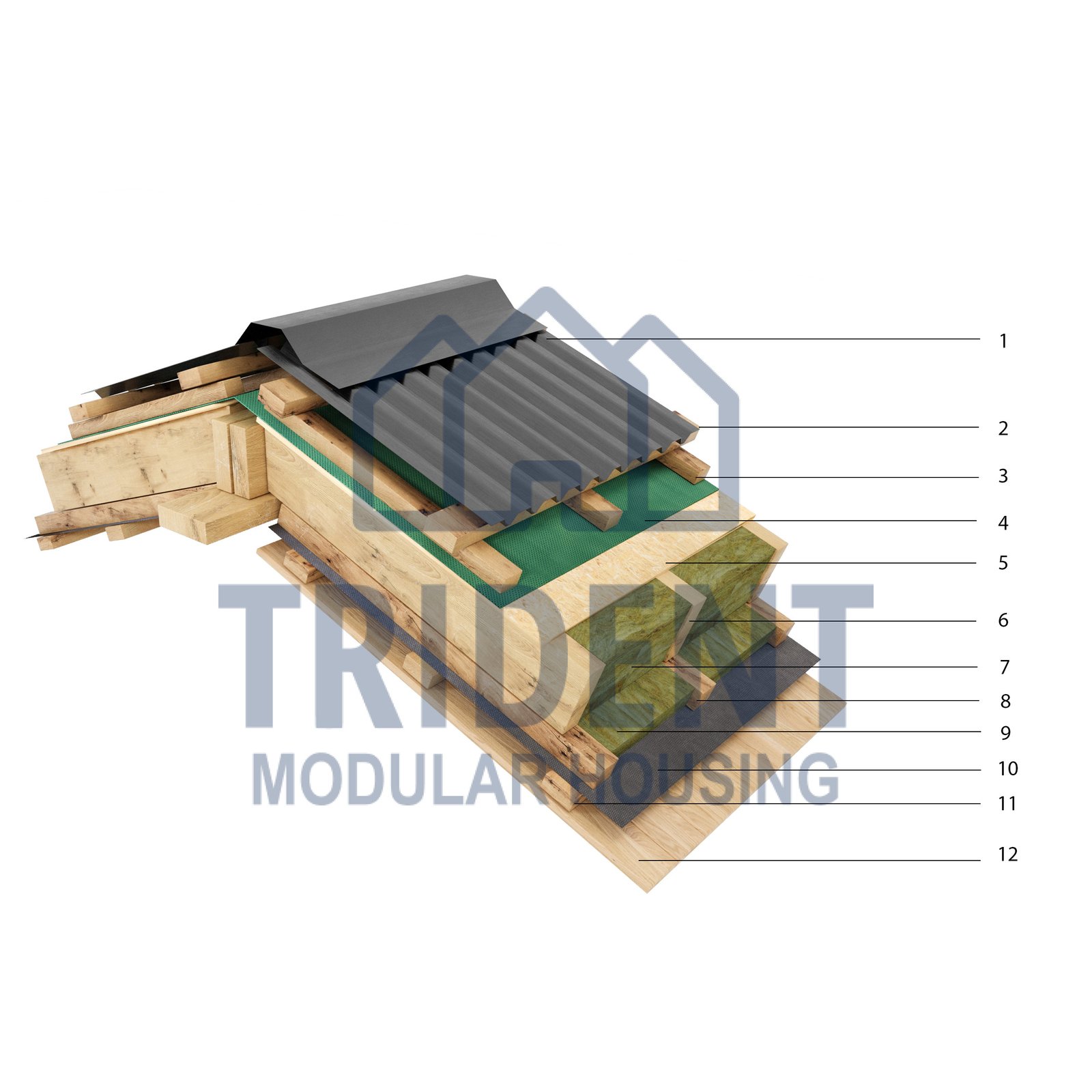
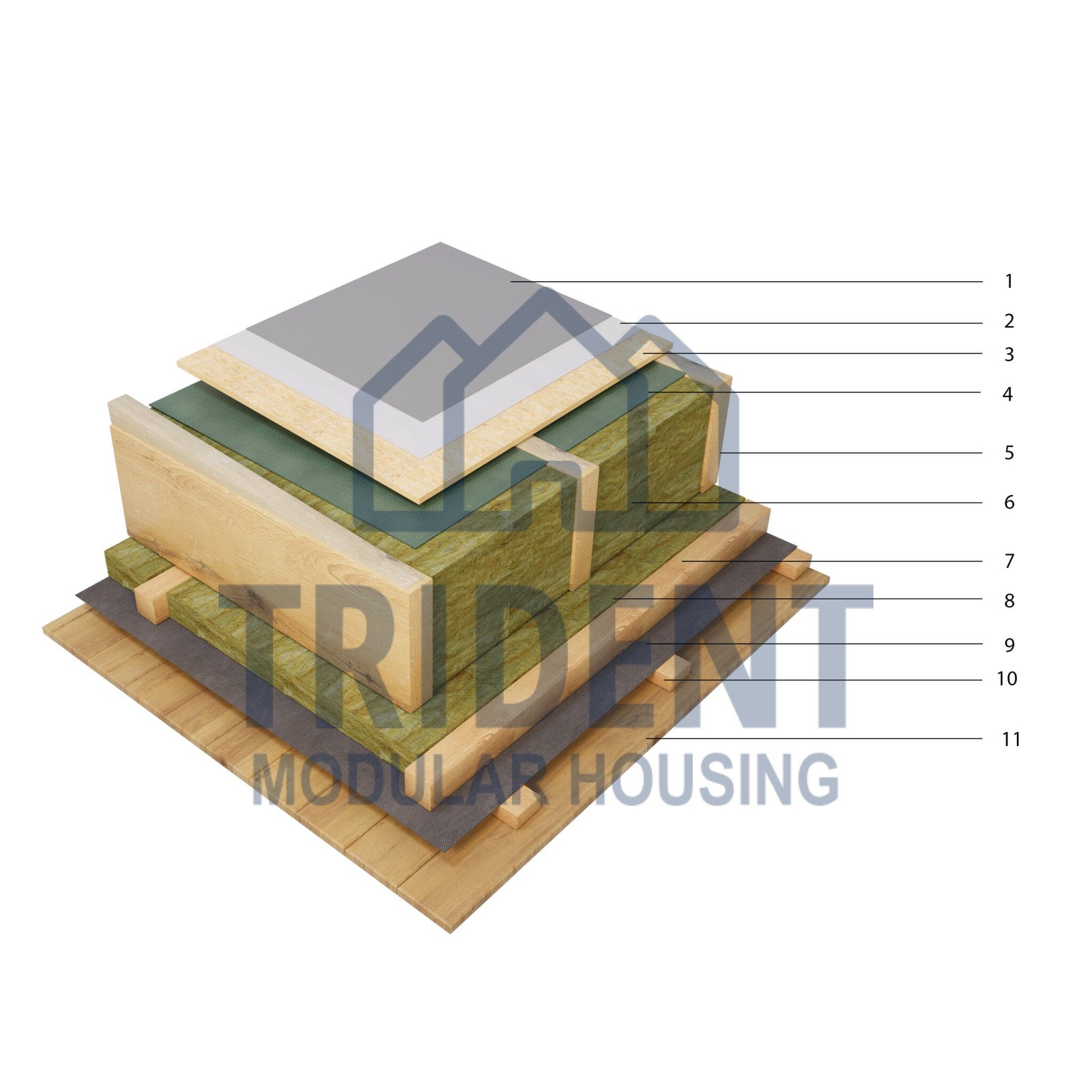
# | Ball | |
|---|---|---|
1 | Roofing | Optional |
2 | Mounting rail | 35 mm |
3 | Guard rail | 35 mm |
4 | Diffusion membrane | Jute |
5 | OSB-3 | 12 mm |
6 | Load-bearing frame | 195 mm |
7 | Basalt wool insulation | 200 mm |
8 | Counter-insulation of timber beams | 45 mm |
9 | Counter-insulation mineral wool | 50мм |
10 | Vapour control layer | Jute |
11 | Internal finishing installation system | Optional |
12 | Interior finishing | Optional |
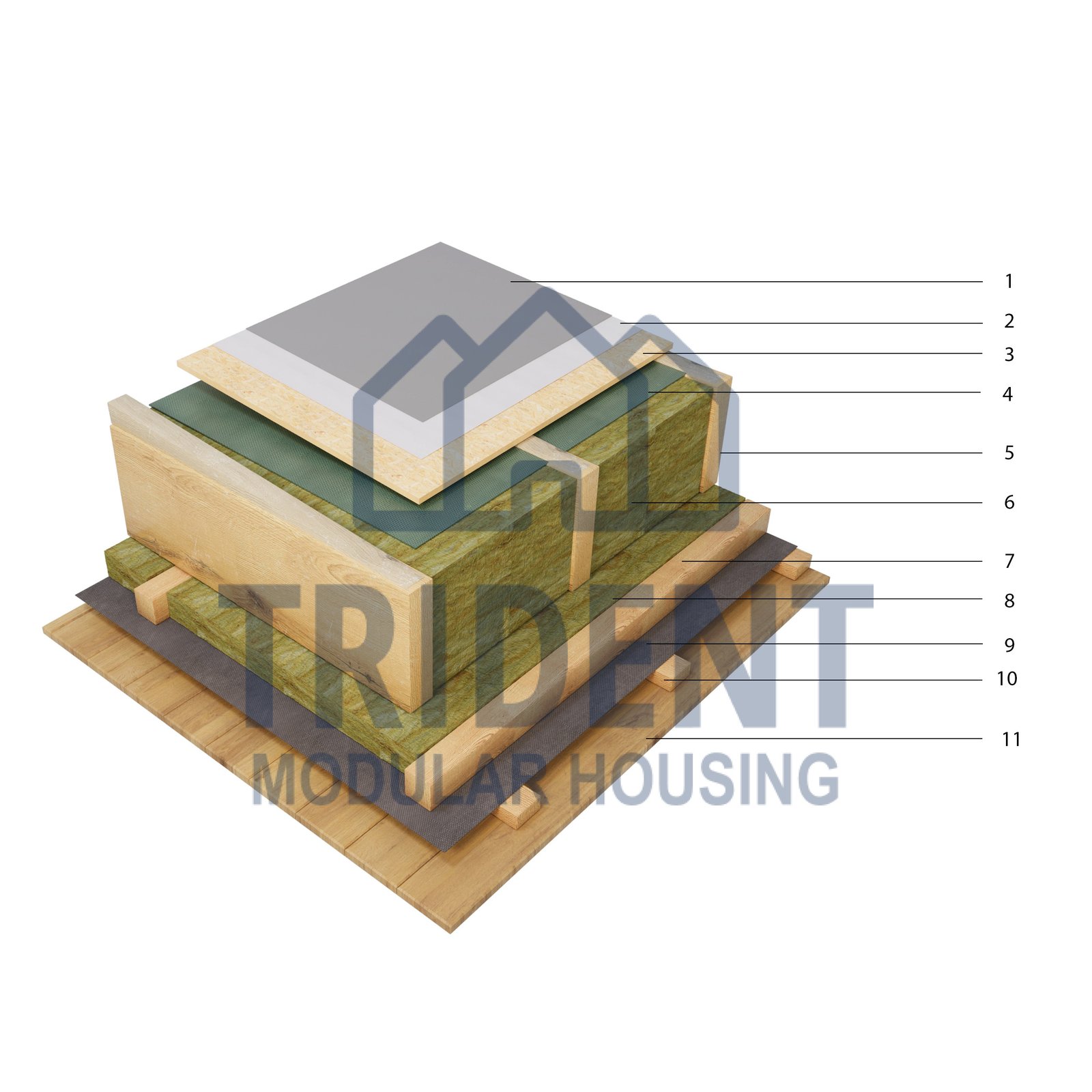
# | Ball | |
|---|---|---|
1 | Roofing | Optional |
2 | Geotextile | 35 mm |
3 | OSB-3 | 18 – 22 mm |
4 | Diffusion membrane | Jute |
5 | Load-bearing frame | 195 mm |
6 | Basalt wool insulation | 200 mm |
7 | Counter-insulation of timber beams | 45 mm |
8 | Counter-insulation mineral wool | 50 mm |
9 | Vapour control layer | Jute |
10 | Internal finishing installation system | Optional |
11 | Interior finishing | Optional |
# | Ball | |
|---|---|---|
1 | Facade | Optional |
2 | Mounting rail | 35 mm |
3 | Diffusion membrane | Jute |
4 | OSB-3 | 12 mm |
5 | Load-bearing frame | 195 mm |
6 | Basalt wool insulation | 200 mm |
7 | Vapour control layer | Jute |
8 | Internal finishing installation system | Optional |
9 | Interior finishing | Optional |
# | Ball | |
|---|---|---|
1 | Interior finishing | Optional |
2 | Internal finishing installation system | Optional |
3 | OSB-3 | 10 mm |
4 | Load-bearing frame | 95 mm |
5 | Basalt wool insulation | 100 mm |
6 | Vapour control layer | Jute |
7 | Internal finishing installation system | Optional |
8 | Interior finishing | Optional |
# | Ball | |
|---|---|---|
1 | Interior finishing | Optional |
2 | OSB-3 | 18-22 mm |
3 | Vapour control layer | Jute |
4 | Basalt wool insulation | 200 mm |
5 | Load-bearing frame | 195 mm |
6 | OSB-3 | 10 mm |
7 | Rodent mesh | Optional |
# | Ball | |
|---|---|---|
1 | Roofing | Optional |
2 | Mounting rail | 35 mm |
3 | Guard rail | 35 mm |
4 | Diffusion membrane | Jute |
5 | OSB-3 | 12 mm |
6 | Load-bearing frame | 195 mm |
7 | Basalt wool insulation | 200 mm |
8 | Counter-insulation of timber beams | 45 mm |
9 | Counter-insulation mineral wool | 50 mm |
10 | Vapour control layer | Jute |
11 | Internal finishing installation system | Optional |
12 | Interior finishing | Optional |
# | Ball | |
|---|---|---|
1 | Roofing | Optional |
2 | Geotextile | 35 mm |
3 | OSB-3 | 18 – 22 mm |
4 | Diffusion membrane | Jute |
5 | Load-bearing frame | 195 mm |
6 | Basalt wool insulation | 200 mm |
7 | Counter-insulation of timber beams | 45 mm |
8 | Counter-insulation mineral wool | 50 mm |
9 | Vapour control layer | Jute |
10 | Internal finishing installation system | Optional |
11 | Interior finishing | Optional |
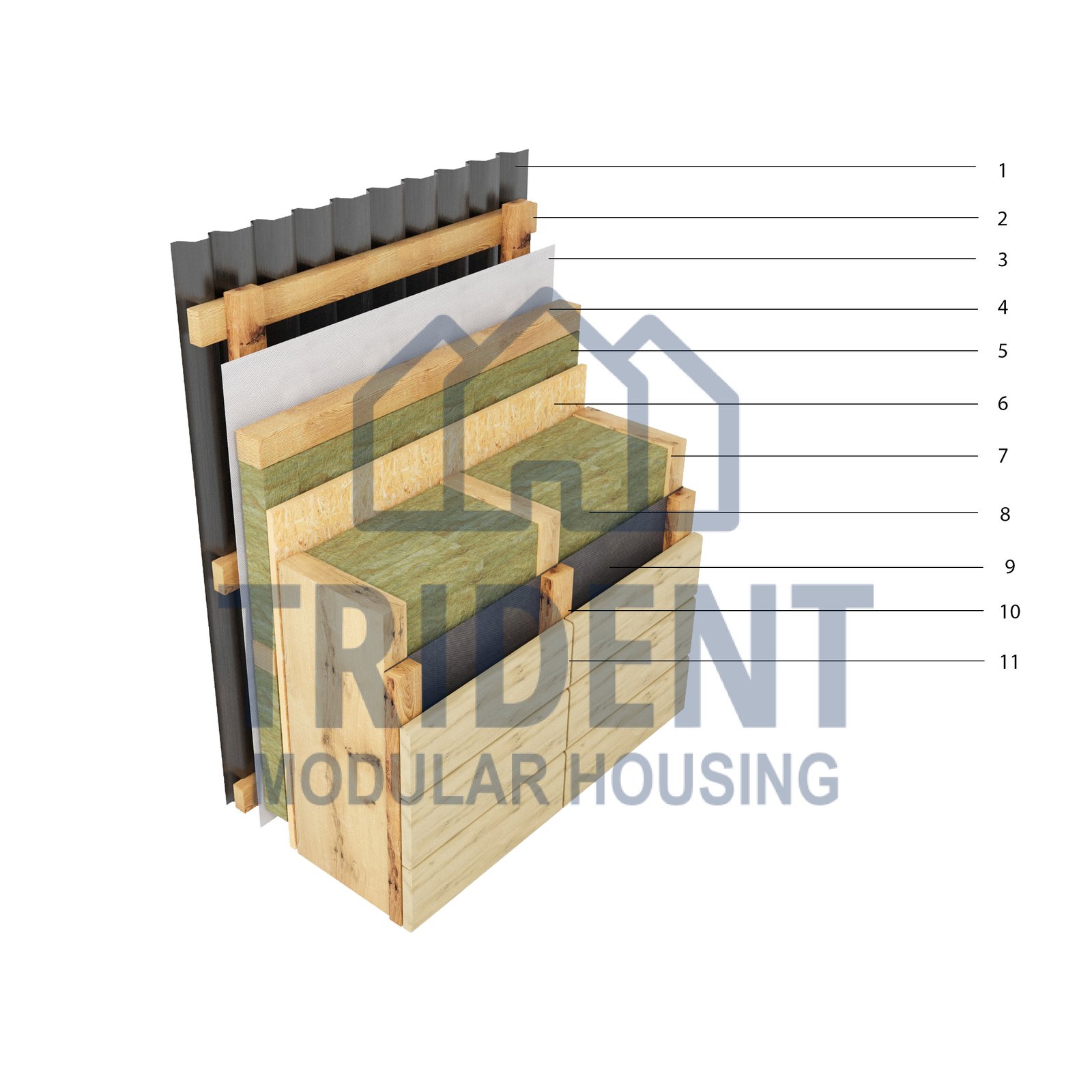
# | Ball | |
|---|---|---|
1 | Facade | Optional |
2 | Mounting rail | 35 mm |
3 | Diffusion membrane | Jute |
4 | Counter-insulation of timber beams | 45 mm |
5 | Counter-insulation mineral wool | 50 mm |
6 | OSB-3 | 12 mm |
7 | Load-bearing frame | 195 mm |
8 | Basalt wool insulation | 200 mm |
9 | Vapour control layer | Jute |
10 | Internal finishing installation system | Optional |
11 | Interior finishing | Optional |
# | Ball | |
|---|---|---|
1 | Interior finishing | Optional |
2 | Internal finishing installation system | Optional |
3 | OSB-3 | 10 mm |
4 | Load-bearing frame | 95 mm |
5 | Basalt wool insulation | 100 mm |
6 | Vapour control layer | Jute |
7 | Internal finishing installation system | Optional |
8 | Interior finishing | Optional |
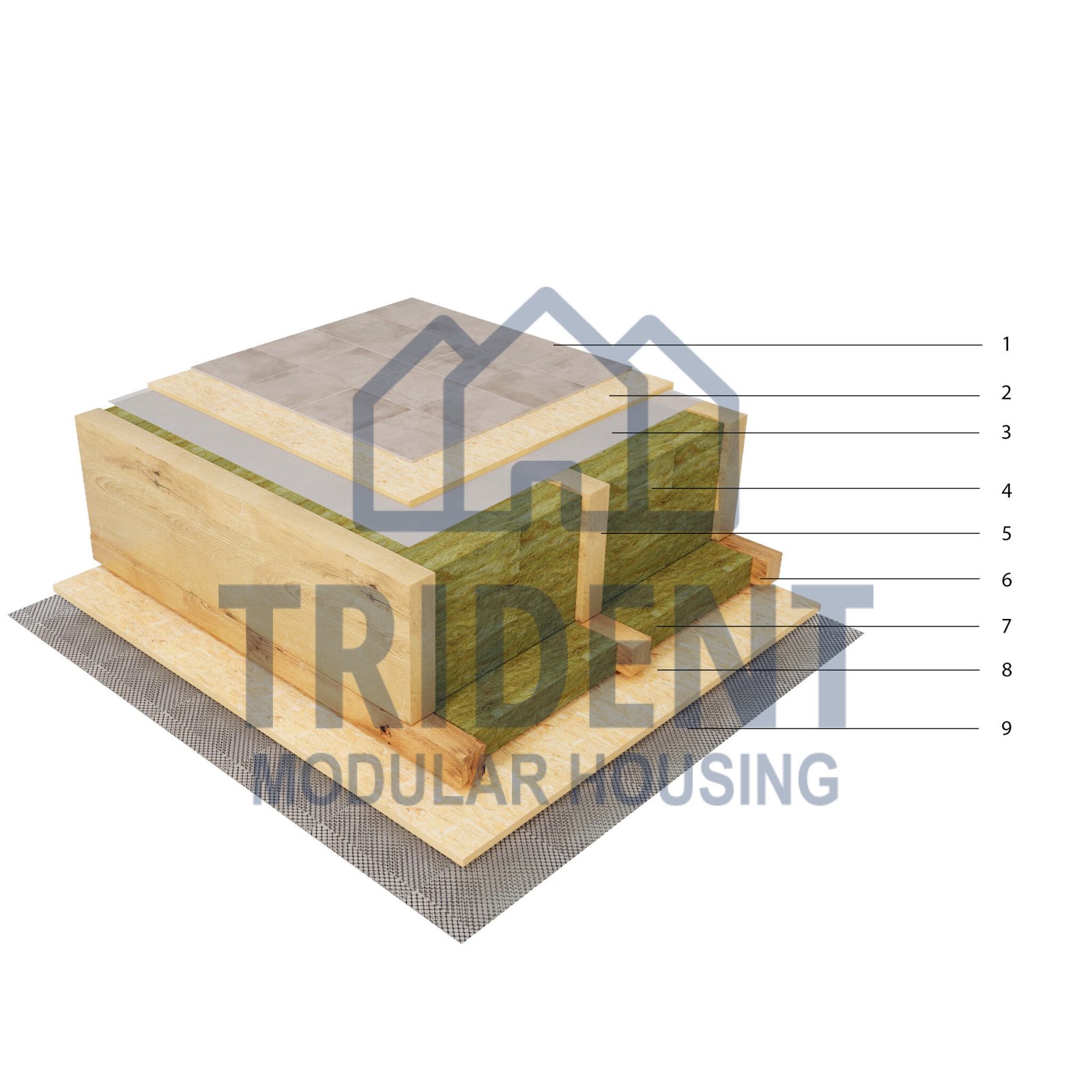
# | Ball | |
|---|---|---|
1 | Internal finishing installation system | Optional |
2 | OSB-3 | 18 – 22 mm |
3 | Vapour control layer | Jute |
4 | Basalt wool insulation | 200 mm |
5 | Load-bearing frame | 195 mm |
6 | Counter-insulation of timber beams | 45 mm |
7 | Counter-insulation mineral wool | 50 mm |
8 | OSB-3 | 10 mm |
9 | Rodent mesh | Optional |
