
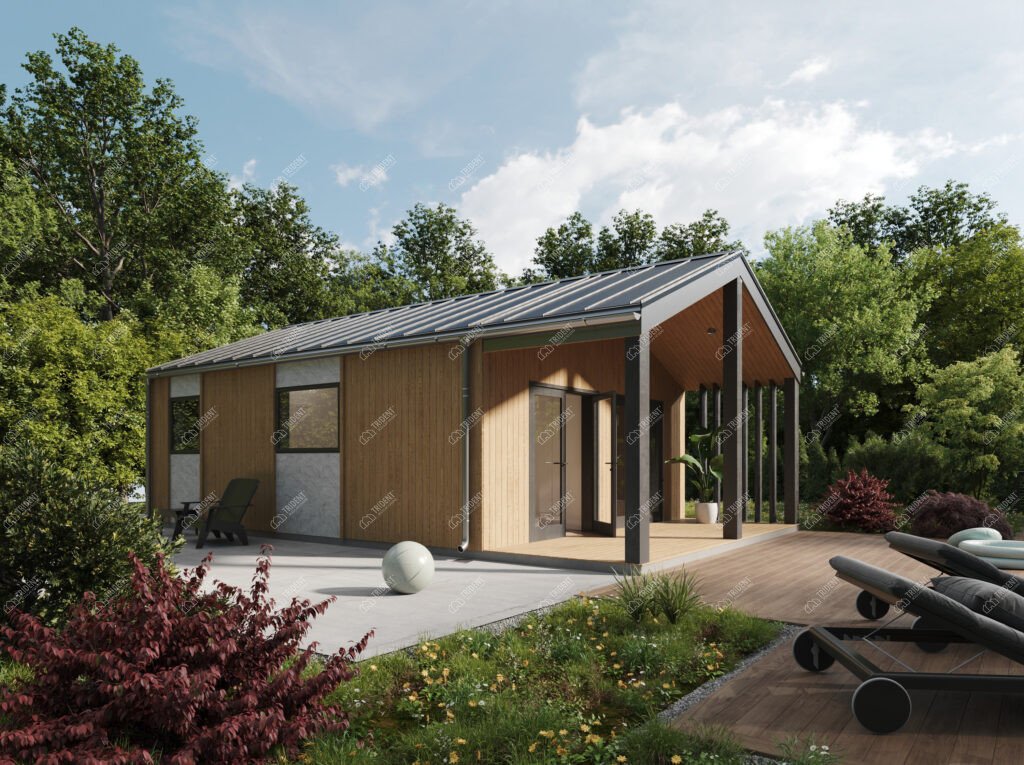
Modular homes are often viewed either too sceptically or, on the contrary, as a “universal solution” without compromises. As a result, most problems arise not during use but at the selection stage, when the main attention is focused only on the price, area, or visual aspect of the project.
In this article, we do not examine the structural features of modular construction in detail but focus specifically on the mistakes that affect the convenience of permanent residence, future expenses, and the overall impression of the home several years after moving in.
Mistake No. 1: Comparing Only the Starting Cost
One of the most common situations is focusing only on the cost of the house itself without considering the foundation, delivery, installation, engineering systems, and site preparation.
As a result, two similar modules can have completely different final budgets. For example, difficult terrain or problematic access to the site can sometimes affect the cost more than additional square metres.
Another important point is the configuration. Some solutions appear cheaper only because ventilation, interior finishing, or part of the utilities are not included in the base price.
Expert Advice from Trident Modular:
Before choosing a project, it is worth calculating not only the cost of the module itself but also the full implementation budget: the foundation, delivery, installation, connection of engineering systems, and site preparation. These expenses most often change the final project cost.
Mistake No. 2: Choosing a Layout Without Considering Real Life
A home for occasional holidays and a home for permanent residence involve different usage scenarios. At the selection stage, attention often shifts to the visual aspect — renderings, panoramic windows, or a terrace. However, for permanent residence, the everyday convenience of the space is no less important.
Why Do Everyday Details Affect the Convenience of a Space More Than It Seems?
In practice, it is everyday details that most often determine how comfortable it is to live in a house every day:
- lack of storage space;
- a narrow passage;
- a small kitchen;
- a poorly planned entrance vestibule;
- a utility room next to the bedroom.
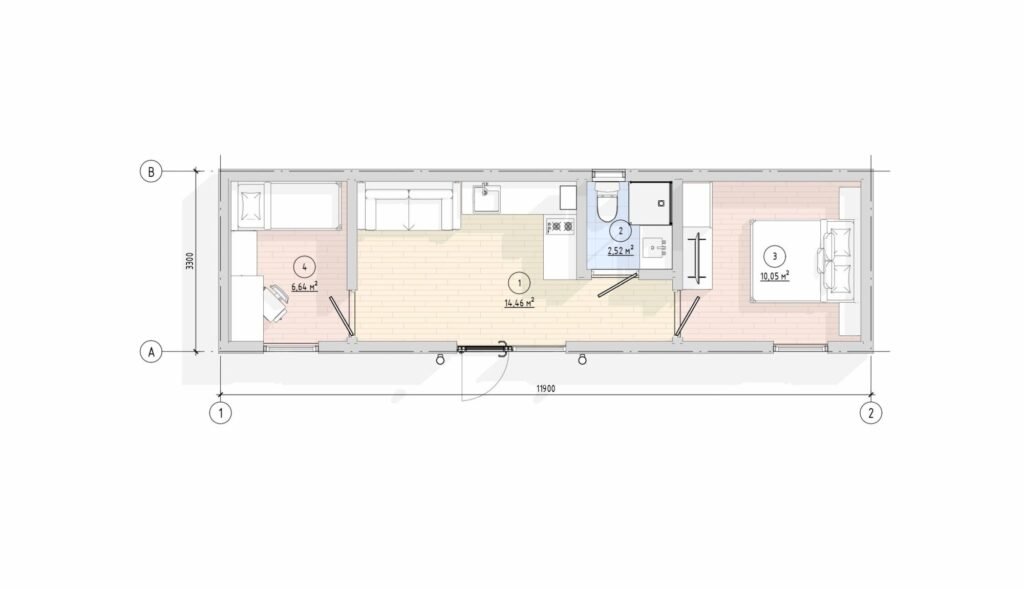
correct doors open or the arrangement of furniture significantly affects everyday comfort.
That is why, before making a choice, it is worth understanding:
- how many people will live in the house permanently;
- whether a separate workspace is needed;
- how often guests will visit;
- whether winter residence is planned.
When this is your first experience with modular construction, it is useful to first understand how modular homes work and what the specific features of this technology,are and only then move on to choosing a particular layout.
Mistake No. 3: Underestimating Insulation and Ventilation
Some concerns about modular housing are specifically related to winter: “it will be cold,” “the walls are thin,” and “the house does not retain heat.” However, the problem usually lies not in the technology itself but in an incorrect configuration for a particular climate and living format.
What Determines Warmth in a Modular Home in Winter?
For example, insufficient insulation is not always noticeable immediately. In autumn, the temperature in the house may seem stable, but during prolonged frosts, heat loss and uneven heating of the rooms can appear.
Another important point is the airtightness of the structure. When joints or structural connections are completed incorrectly, some heat is lost even with good insulation.
Ventilation is also particularly important. In a modern airtight home without proper air exchange, moisture quickly accumulates. At first, this appears as “fogged-up windows,” but over time it affects the interior finish, microclimate, and even the feeling of freshness in the air.
That is why the advantages and limitations of a modular home depend not on the technology itself but on how correctly the insulation, ventilation, and engineering systems are selected for a specific living scenario.
Mistake No. 4: Failing to Consider the Foundation and Site Features
Site preparation often remains “behind the scenes” at the home selection stage, although it significantly affects installation and future use. In practice, the foundation often determines both the installation timeline and the future stability of the house.
Why Do Installation Times Often Depend on the Site?
The type of foundation depends on:
- the terrain;
- the soil type;
- the groundwater level;
- seasonal loads;
- access for machinery to the site.
For example, even a finished module cannot always be installed quickly when access to the site is difficult or the site has not been prepared for installation.
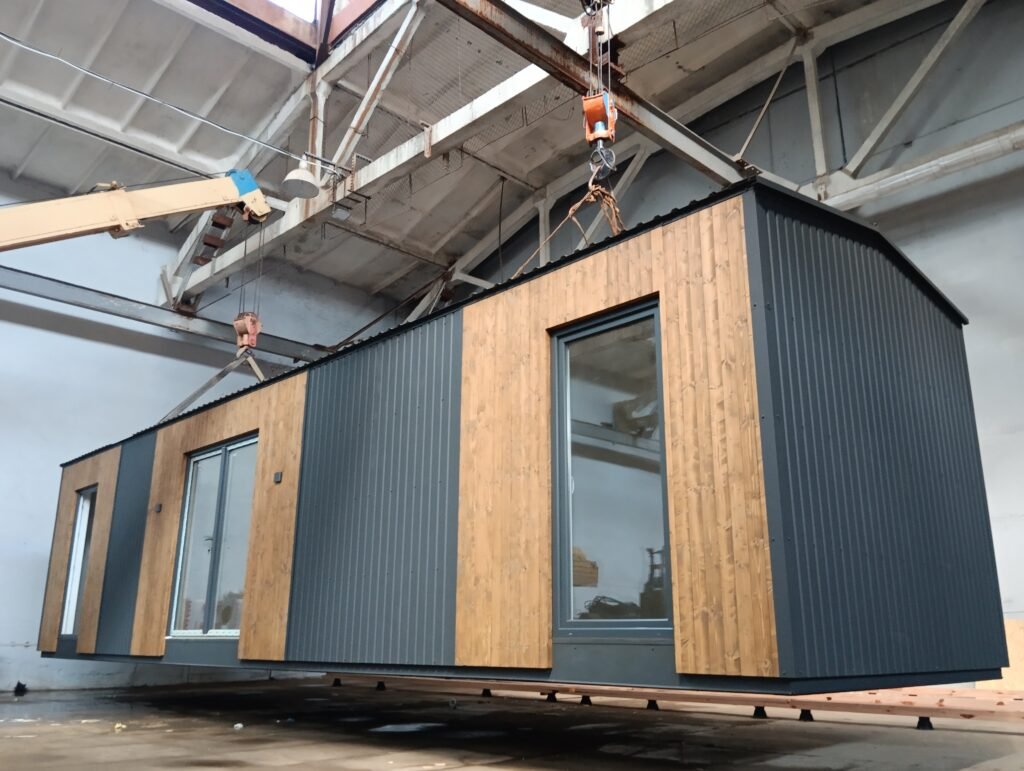
Another practical detail is that an incorrectly selected or constructed foundation can cause micro-deformations in the structure. At first, this is almost unnoticeable, but over time, problems may arise with joints, doors, or interior finishing.
As a result, the implementation timeline for a modular home often depends not on module production but specifically on the readiness of the site itself.
Therefore, before choosing a modular home, it is worth separately assessing the features of the site, the foundation, and the future living scenario before the project is finally approved.
Expert Advice from Trident Modular:
Before approving the project, the site must be checked separately: the terrain, access for machinery, the possibility of installation, utilities, and the type of foundation. Even a finished modular home cannot be installed properly without a prepared location.
Mistake No. 5: Choosing a Home “for Now” Rather Than for Several Years Ahead
At the home selection stage, attention is usually focused on current needs. However, a home for permanent residence rarely remains unchanged for many years.
After some time, you may need:
- a separate children’s room;
- a home office;
- additional storage space;
- a terrace;
- a utility room.
That is why it is important to assess not only the finished layout but also the possibility of adapting the space in the future.
One of the features of modular technology is the possibility of expanding or extending the home without completely dismantling the structure. However, this depends on how correctly the house was designed from the beginning.
When it is difficult to assess which layout will be suitable for living several years into the future, it is worth looking at ready-made modular home projects for different living scenarios and comparing how the space is organised in different formats.
Mistake No. 6: Viewing a Modular Home as Temporary Housing
For many people, modular construction is still associated primarily with seasonal or temporary solutions. As a result, doubts often arise about living permanently in such a house.
In fact, the difference between a cheap seasonal module and a home for year-round living is approximately the same as the difference between a summer cottage and a traditional house. What matters is not the technology itself but the level of design, engineering systems, and materials.
Another factor that is often underestimated is sound insulation. During the selection process, most attention is usually paid to thermal insulation, although protection against external noise and sounds inside the house is also important for everyday life.
Therefore, when choosing a home, it is important to assess:
- the wall structure;
- the type of windows;
- ventilation;
- engineering systems;
- the winter usage scenario.
Modern modular homes for permanent residence are a separate housing format with their own specific features, advantages, and limitations, rather than a “simplified version” of a traditional house.
In Brief: Which Mistakes Occur Most Often?
Most mistakes when choosing a modular home are related not to the technology itself but to insufficient attention to the living scenario, configuration, and site features. Below is a brief summary of the points that most often affect the budget, quality of living, and future use of the house.
| Mistake | What to Do Instead |
| Focus only on the starting price | Assess the full budget, including the foundation, delivery, and installation |
| Choose a layout based only on renderings | Analyse the everyday living scenario |
| Underestimate insulation | Select a configuration for year-round use |
| Fail to consider the site features | Assess the soil, terrain, access, and utilities |
| Plan the home only around current needs | Allow for the possibility of adapting the space in the future |
What Has the Greatest Impact on the Quality of Living in a Modular Home?
The quality of living in a modular home depends not on a single decision but on a combination of several factors: the layout, insulation, ventilation, foundation, engineering systems, and installation quality. That is why two homes of the same size can feel completely different in everyday use.
Before making a choice, it is important to assess not only the appearance or construction speed but also how well the home will meet the family’s actual needs after several years of permanent residence. This is usually what determines whether modular housing will be practical in the long term.
What to Check Before Choosing a Modular Home
- the full budget, not only the starting cost;
- the home configuration;
- insulation and ventilation;
- the type of foundation;
- the site features;
- the winter living scenario;
- the possibility of adapting the layout in the future;
- logistics and utility connections.
When it is difficult to determine which configuration, size, or layout will be suitable for permanent residence, it is worth discussing the intended use of the home with Trident Modular specialists at the selection stage. This will help take into account the site features, winter use, engineering systems, and the family’s future needs.
FAQ — Frequently Asked Questions and Answers
Is a modular home suitable for permanent residence?
Yes, provided that the home was originally designed for year-round use and has appropriate insulation, ventilation, and engineering systems.
Will It Be Cold in a Modular Home in Winter?
Warmth in winter depends not only on the insulation layer but also on the airtightness of the structure, ventilation, window quality, and a properly selected heating system.
How Long Does It Take to Install a Modular Home?
Installation usually takes less time than traditional construction, but the timeline depends on the readiness of the foundation, logistics, and utility connections.
Can the Layout Be Changed After Installation?
In many cases, yes. Some modular homes can be adapted or expanded depending on the family’s needs.
What Has the Greatest Impact on the Cost?
The budget is affected by the size of the house, configuration, insulation, engineering systems, foundation type, and the complexity of installation on a specific site.
Which Configuration Is Best for Permanent Residence?
For year-round living, not only insulation but also ventilation, structural airtightness, the type of windows, and engineering systems are important. The configuration should be selected for the specific intended use of the home.
What Should Be Checked Before Ordering a Modular Home?
It is important to assess not only the project itself but also the site features, foundation, installation logistics, configuration, and the possibility of connecting utilities.